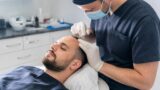
You just invested thousands of dollars, hours of research, and a full day in the surgical chair to restore your hairline. The grafts are in place, the healing process has begun, and now you want to celebrate – or simply unwind – with a drink. That impulse is completely understandable, but alcohol after a hair transplant is one of the most common ways patients unknowingly sabotage their own results. Research published in the Journal of Clinical and Aesthetic Dermatology confirms that post-operative compliance, including abstaining from alcohol, directly correlates with graft survival rates above 90%. Drop below that compliance threshold and you risk losing grafts that cannot be re-implanted in the same session. The question of when it’s safe to drink again isn’t trivial: the answer involves blood chemistry, medication interactions, hydration status, and the biology of wound healing. Knowing the precise timeline and the science behind it gives you the best shot at protecting every single follicle your surgeon placed. This matters whether you had an FUE, DHI, or any other extraction method, because the post-op biology is remarkably similar across techniques.
Why Drinking After Hair Transplant Impacts Recovery
A hair transplant is a surgical procedure, even though it’s minimally invasive. Your scalp contains thousands of tiny micro-channels where grafts were inserted, each one triggering a cascade of healing responses: clotting, inflammation, new blood vessel formation, and tissue remodeling. Anything that disrupts this chain puts graft survival at risk.
Alcohol interferes with this process on multiple fronts. It thins the blood, dehydrates tissue, suppresses immune function, and disrupts sleep architecture – all of which are critical to wound healing. A 2019 study from the University of Colorado found that even moderate alcohol consumption (two standard drinks) reduced wound tensile strength by up to 15% in the first week of healing. For a hair transplant patient, that translates directly to weaker graft anchoring and a higher chance of follicle loss.
The effects aren’t just theoretical. Surgeons at leading transplant clinics report that patients who drink within the first week post-op show measurably higher rates of graft dislodgment, prolonged redness, and delayed scab separation. Your body is doing precision repair work at the microscopic level, and alcohol is essentially throwing sand in the gears.
Alcohol Blood Thinning and Graft Survival
Alcohol acts as an anticoagulant. Within 30 minutes of consumption, it inhibits platelet aggregation and reduces levels of fibrinogen, a protein essential to clot formation. For someone with 3,000 to 5,000 freshly placed grafts, each sitting in a recipient site roughly 0.8mm to 1.2mm in diameter, this is a serious concern.
Each graft depends on a tiny fibrin clot to hold it in place during the first 48 to 72 hours. If blood thinning from alcohol prevents that clot from forming properly, the graft can dislodge with minimal contact – a pillow, a light touch, even a strong gust of wind. Studies on platelet function show that a single episode of heavy drinking (four or more standard drinks) can impair clotting for up to 24 hours afterward. The blood thinning effect of alcohol on grafts is not something you can feel or see happening until it’s too late. By the time you notice increased oozing or a graft sitting at an odd angle, the damage is done.
Dehydration and Nutrient Delivery to the Scalp
Alcohol is a diuretic. It suppresses antidiuretic hormone (ADH), causing your kidneys to excrete more water than you’re taking in. A single glass of wine can result in a net fluid loss of approximately 100ml beyond what you consumed. Scale that up to several drinks and you’re looking at significant dehydration.
Why does this matter for your scalp? Newly transplanted grafts receive their initial blood supply through a process called plasmatic imbibition – they absorb nutrients from surrounding plasma before new capillaries form. Dehydration reduces plasma volume, thickens blood, and slows microcirculation to the scalp. The grafts are essentially starving. According to Dr. Robert Bernstein, a pioneer in follicular unit transplantation, adequate hydration in the first 10 days is one of the simplest and most effective ways to support graft survival. Drinking alcohol works directly against this by pulling fluid away from the tissues that need it most.
The Recommended Hair Transplant Alcohol Timeline
Timing your return to alcohol isn’t guesswork. It follows the biological stages of graft healing, and understanding those stages helps you make informed decisions rather than relying on vague advice.
Immediate Post-Op: The Critical 48-Hour Window
The first 48 hours are non-negotiable. During this period, grafts are at their most vulnerable. They’re held in place only by the initial fibrin clot and haven’t yet established any vascular connection to the surrounding tissue. Drinking during this window is the single highest-risk behavior a patient can engage in, short of physically pulling grafts out.
Most transplant surgeons, including the medical team at Estenove, instruct patients to avoid alcohol for a minimum of 72 hours, with many recommending a full seven-day abstinence period. The reasoning is straightforward: even one drink during this window can measurably increase bleeding risk and compromise clot integrity. If you’re taking prescribed antibiotics or anti-inflammatory medications (which nearly all post-op patients are), alcohol compounds the problem by interfering with drug metabolism.
During these first two days, focus on hydration. Aim for 2.5 to 3 liters of water daily. Electrolyte drinks without added sugar are helpful. Sleep with your head elevated at 45 degrees to reduce swelling, and avoid any substance that could thin your blood, including aspirin, ibuprofen, and alcohol.
Long-Term Healing: When Can I Drink After Hair Transplant?
After the initial 72-hour window, the risk decreases but doesn’t disappear. Here’s a practical timeline based on healing milestones:
- Days 1-3: Absolute zero alcohol. Grafts are anchored only by fibrin clots.
- Days 4-7: Still high risk. Neovascularization (new blood vessel growth) is just beginning. One drink could still disrupt healing.
- Days 7-14: Grafts are more secure but not fully anchored. A single light drink (one glass of wine or beer) is unlikely to cause catastrophic damage, but it’s not recommended.
- Days 14-30: Most surgeons give cautious clearance for moderate, occasional drinking. The grafts have established blood supply and the recipient sites are largely closed.
- Day 30 and beyond: Normal drinking patterns can typically resume without significant risk to graft survival.
The safest answer to when you can drink after a hair transplant is: wait at least two full weeks, and ideally a month. The longer you wait, the more secure your investment becomes.
Risks of Premature Alcohol Consumption
Interaction with Post-Surgical Medications
Nearly every hair transplant patient leaves the clinic with a prescription regimen that typically includes an antibiotic (often cephalexin or azithromycin), a corticosteroid (such as methylprednisolone to control swelling), and a pain reliever. Alcohol interacts negatively with all three categories.
Mixing alcohol with antibiotics like metronidazole causes severe nausea, vomiting, and abdominal cramping – a reaction so intense it’s used therapeutically to discourage alcohol consumption in addiction treatment. Even with antibiotics that don’t cause this specific reaction, alcohol reduces their absorption and effectiveness, raising your infection risk. Corticosteroids combined with alcohol increase the likelihood of gastrointestinal bleeding and stomach ulcers. Pain medications, particularly those containing acetaminophen, become hepatotoxic (liver-damaging) when combined with alcohol. The FDA warns that as few as three alcoholic drinks per day combined with standard doses of acetaminophen can cause acute liver injury.
Increased Risk of Edema and Bleeding
Forehead and periorbital edema (swelling around the eyes) is already common after hair transplant surgery, typically peaking around day 3 to 5. Alcohol worsens this significantly. It causes vasodilation – widening of blood vessels – which increases fluid leakage into surrounding tissues. Patients who drink in the first week frequently report swelling that migrates down to the eyelids, sometimes causing them to swell shut.
Bleeding is the other major concern. Even minor oozing from recipient sites can dislodge grafts that haven’t fully anchored. Alcohol’s anticoagulant effect means that small bleeds that would normally self-resolve in minutes can persist for hours. Some patients report waking up to blood-stained pillows after drinking prematurely, which often means lost grafts that cannot be recovered.
Best Practices for Resuming Alcohol Safely
When you do start drinking again, a gradual approach protects your results and gives you a clear signal if anything feels off.
Start with a single low-alcohol beverage, such as a light beer or a glass of wine (not spirits). Drink it with a full meal to slow absorption. Monitor your scalp for any unusual redness, warmth, or oozing over the following 12 hours. If you notice any of these signs, stop and wait another week.
Practical guidelines for safe resumption:
- Limit yourself to one drink on your first occasion back, and don’t drink again for at least 48 hours.
- Stay well-hydrated: match every alcoholic drink with at least one full glass of water.
- Avoid spirits and cocktails with high alcohol concentrations for the first month. A 40% ABV spirit hits your bloodstream much faster than a 5% beer.
- Don’t combine alcohol with any remaining post-op medications.
- Track your progress by taking monthly photos of your hairline under consistent lighting. If you notice any areas of poor growth that correlate with early alcohol consumption, mention this to your surgeon at your follow-up appointment.
Red wine deserves a specific mention. While it contains resveratrol (an antioxidant), it also contains histamines and sulfites that can trigger scalp inflammation in sensitive individuals. If you’re prone to flushing or headaches from red wine, choose a different beverage for your first post-transplant drink.
FAQ
At two weeks, most grafts have established a basic blood supply and the recipient sites are largely healed. A single moderate drink is unlikely to cause graft loss at this stage. However, heavy drinking (three or more drinks) can still impair healing and increase swelling. The safest approach is one drink, consumed with food, followed by extra hydration.
Alcohol inhibits platelet aggregation and reduces fibrinogen levels, both of which are essential for blood clotting. This effect begins within 30 minutes of consumption and can last 12 to 24 hours depending on the amount consumed. For hair transplant patients, this means the tiny clots holding grafts in place can dissolve or fail to form properly.
A single drink consumed after the first week is very unlikely to cause measurable harm. The real danger lies in drinking during the first 72 hours or drinking heavily (four or more drinks) at any point during the first month. One beer at day 10 is a low-risk scenario; four cocktails at day 3 is a high-risk one.
Yes, through multiple mechanisms: blood thinning weakens clot anchoring, dehydration reduces nutrient delivery to grafts, immune suppression increases infection risk, and poor sleep quality slows tissue repair. The cumulative effect can reduce graft survival rates from the expected 90-95% range down to 70-80% in patients who drink heavily during the first two weeks.
The minimum recommendation is 72 hours, but most experienced surgeons advise at least 7 to 14 days of complete abstinence. For optimal results, a full 30 days without alcohol gives your grafts the best possible environment to take root and thrive. Consider it a small sacrifice for a result you’ll carry for decades.