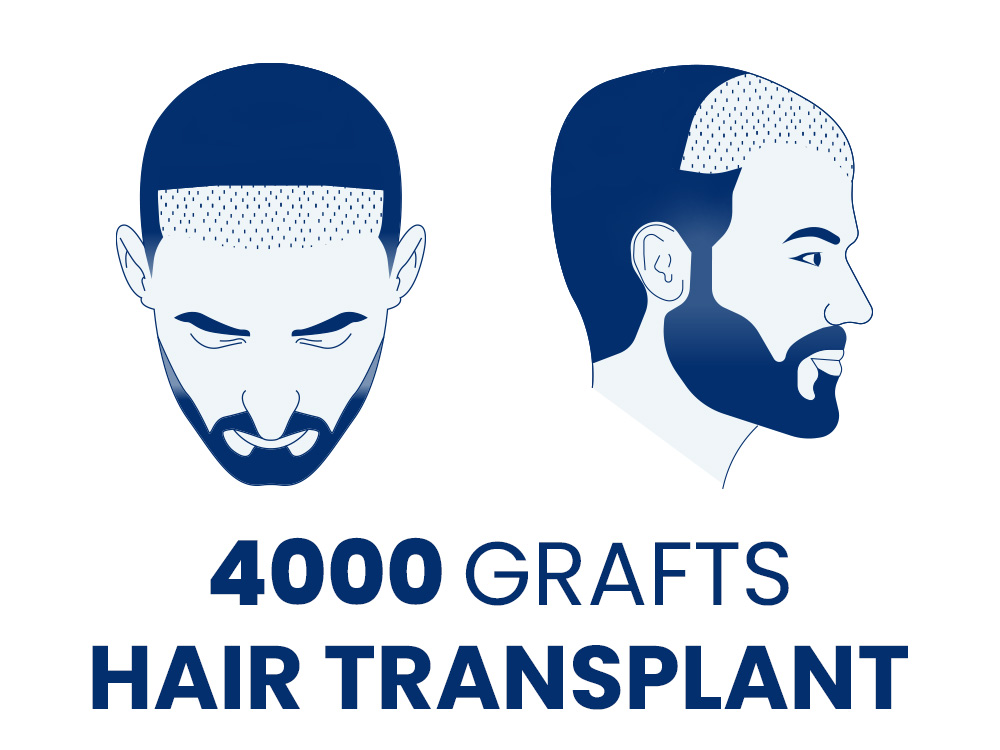
A 4000 grafts hair transplant is one of the most common large sessions performed for advanced hair loss. It allows surgeons to restore the hairline, frontal scalp, and mid-scalp, with partial crown coverage depending on donor capacity. With careful planning, this procedure can deliver a dramatic and natural-looking transformation for patients in Norwood stage IV–V baldness.
What Does 4000 Grafts Cover?
With 4000 grafts, surgeons can typically rebuild the hairline, add density across the frontal third, and cover much of the mid-scalp. In many cases, part of the crown can also be treated. This graft count usually restores 80–100 cm² of thinning scalp, depending on hair caliber and skin–hair color contrast.1
How Many Hairs Are in 4000 Grafts?
Each follicular unit graft contains an average of 2–2.5 hairs. This means 4000 grafts equal approximately 8,000–10,000 hairs. Patients with thicker shafts, natural curl, or dark hair against light skin often achieve even greater visual density from the same number of grafts.2
Who Is a Candidate for 4000 Grafts?
Not all patients are suitable for a large session. A 4000 graft transplant is typically recommended for:
- Hair loss stage: Norwood IV–V with extensive recession and thinning on top.
- Donor quality: High follicle density and adequate scalp elasticity to avoid overharvesting.3
- Expectations: Natural density in the frontal and mid-scalp, with realistic goals for the crown.
- General health: Stable hair loss, no active scalp disease, and good systemic health.
Proper planning is crucial, extracting too many grafts too quickly can deplete the donor area, which may be needed for future procedures.3
Is 4000 Grafts Overharvesting?
When performed correctly, 4000 grafts is not considered overharvesting. The key is to remain within the safe donor zone, primarily the occipital scalp where follicles are genetically resistant to DHT. Studies show that safe excision density is about 10–15 grafts per cm² for average-density donors, though in patients with higher donor density, up to 20–25 grafts/cm² may be harvested without visible thinning.1 Overharvesting occurs when too many grafts are removed from a concentrated area, leaving patchiness or donor depletion. Advanced techniques like FUE also help surgeons visualize donor distribution and reduce the risk of overharvesting.4

Calculate the number of grafts needed for your hair transplant and get an estimated cost for various destinations
How Much Is 4000 Grafts in Turkey?
The cost of a 4000 grafts hair transplant varies significantly by country. Turkey offers the most competitive rates while maintaining international standards.
| Country | Average Cost (4000 grafts) |
|---|---|
| Turkey | $2,800 – $4,500 |
| Australia | $10,000 – $12,000 |
| Germany | $10,000 – $11,500 |
| UK | $12,000 – $13,000 |
| Canada | $12,000 – $14,500 |
| USA | $12,000 – $18,000 |
| France | $16,000 – $19,000 |
At Estenove, hair transplant packages are all-inclusive, covering maximum grafts in one session, PRP treatment, VIP transfers, hotel accommodation, interpreter services, and an aftercare kit. Optional stem cell–supported transplants are also available.
Ready to take the next step? Fill out the form below for a free consultation with our medical consultants and receive your tailored treatment plan.
4000 Grafts Hair Transplant Procedure and Duration
A 4000 graft session is a large-scale surgery usually performed under local anesthesia. It can last 6–8 hours, and in some cases may be split over two consecutive days to protect graft survival and patient comfort.5
Techniques for 4000 grafts:
- FUE: Reliable for large sessions; involves manual or motorized punches with safe donor extraction.
- Sapphire FUE: Uses sapphire blades that allow finer incisions and denser packing, especially at the frontal hairline.
- DHI: Offers high precision for angulation but is slower for 4000 graft sessions, sometimes requiring longer surgical time or higher costs.
One of the most important factors in large sessions is graft handling. Research indicates that follicles kept outside the body for more than 2 hours show a drop in survival rates, which is why minimizing ischemia time is critical in 4000+ graft surgeries.1
4000 Grafts Hair Transplant Before and After
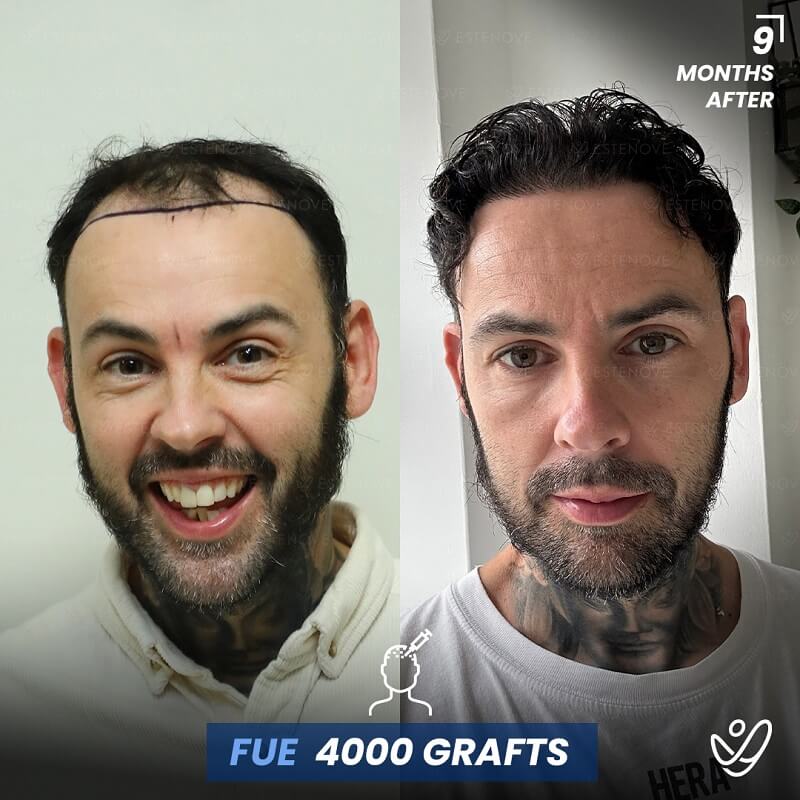
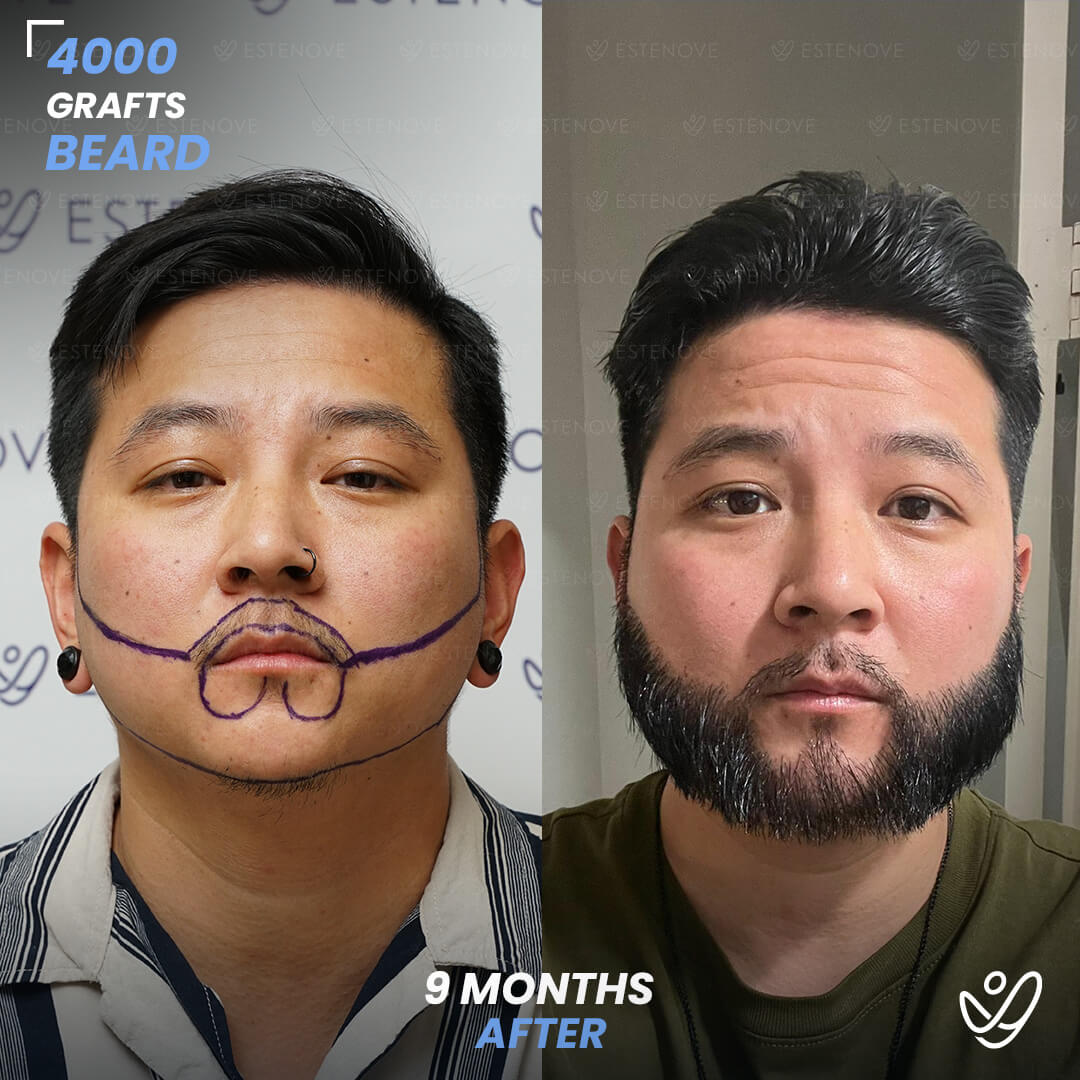
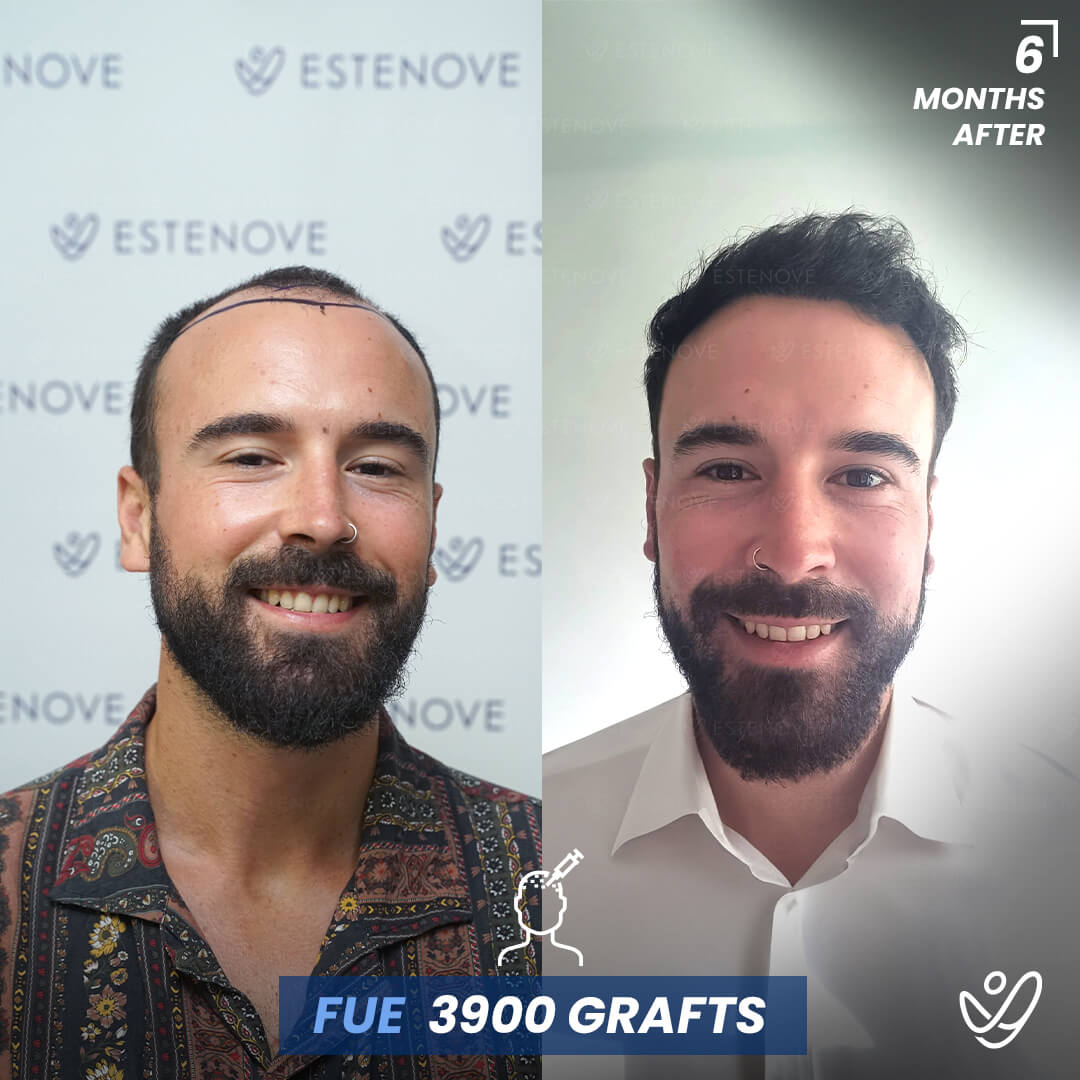
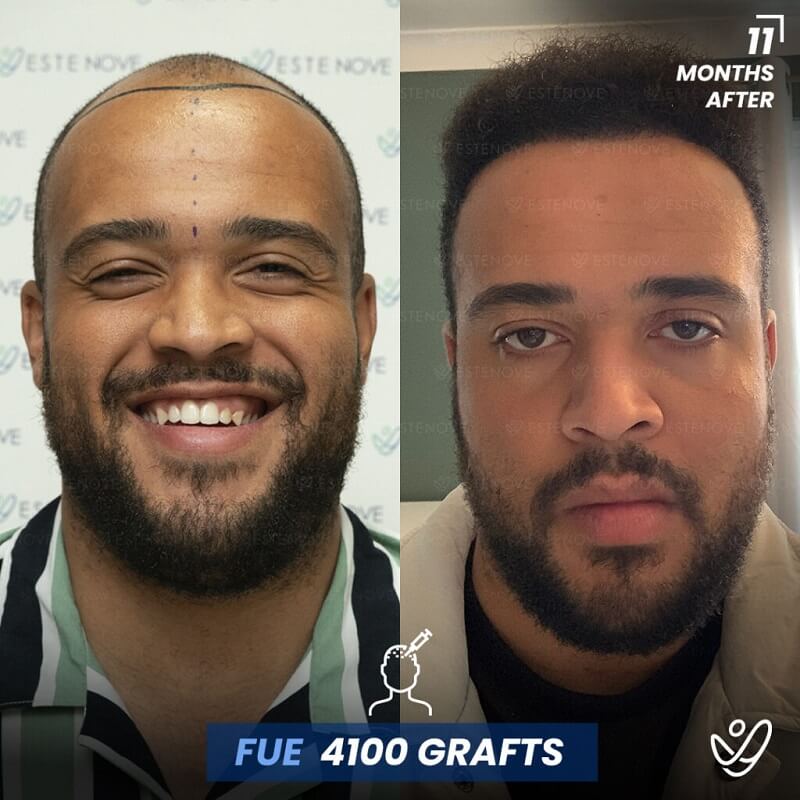
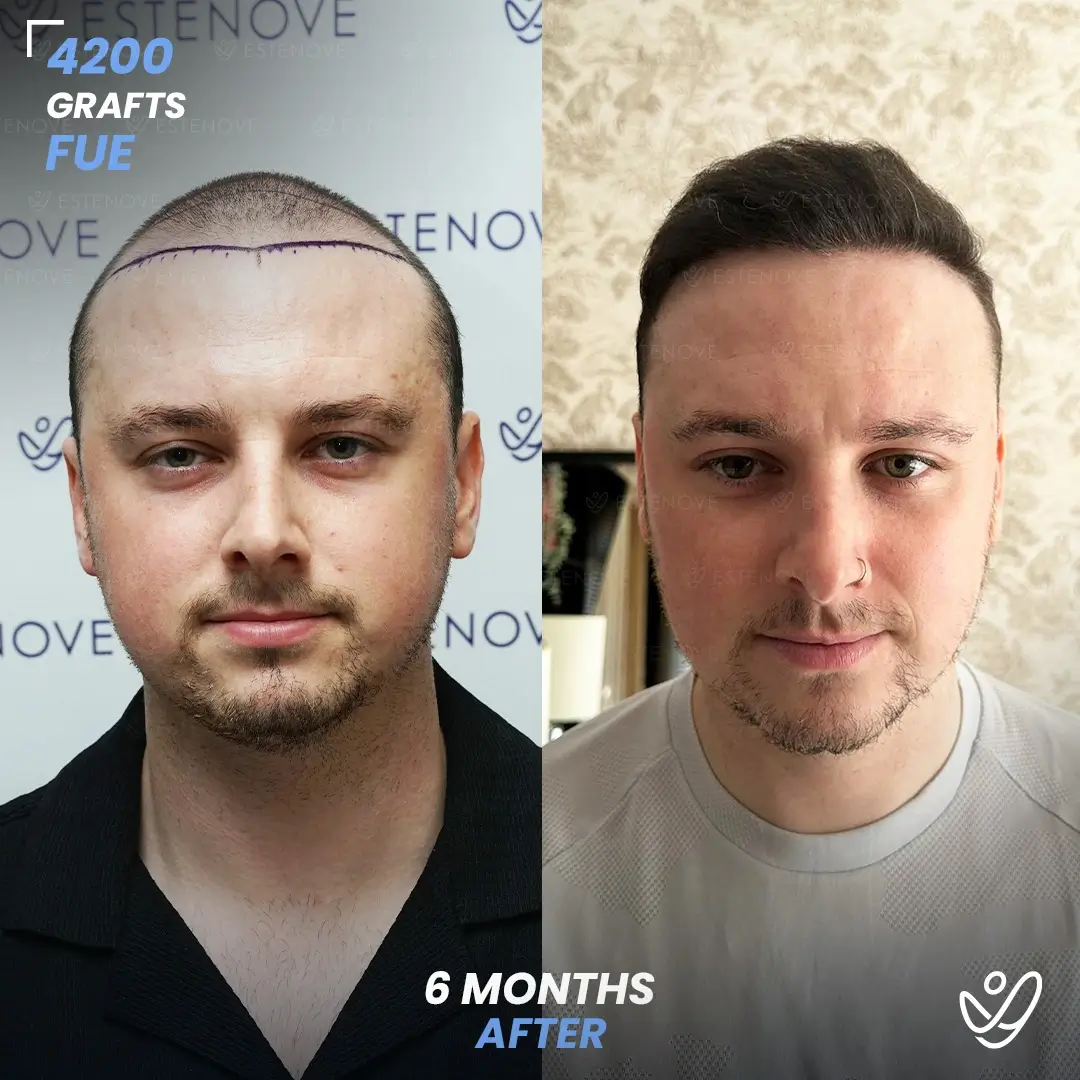
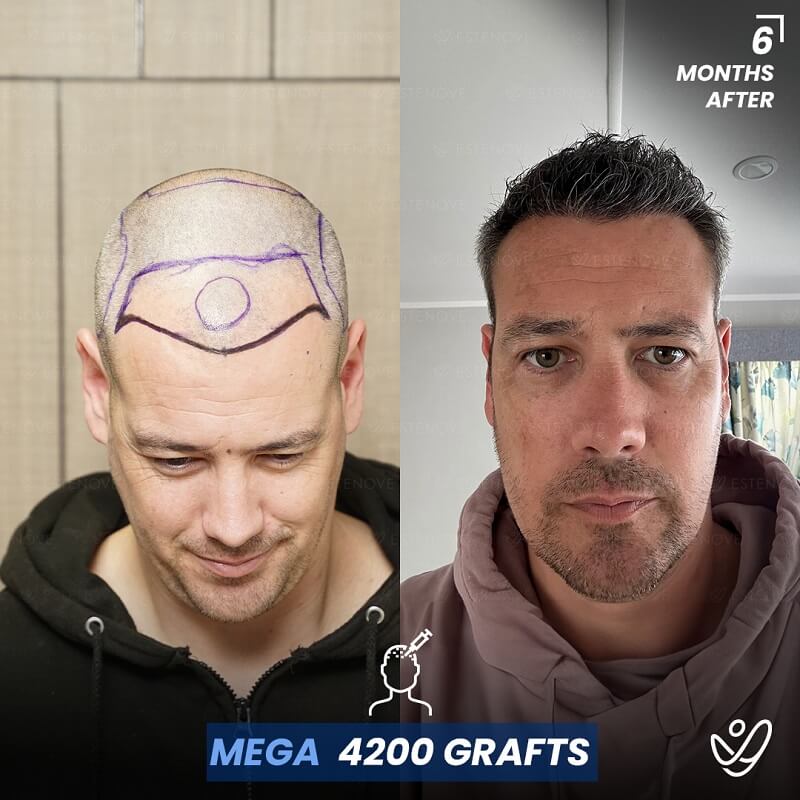
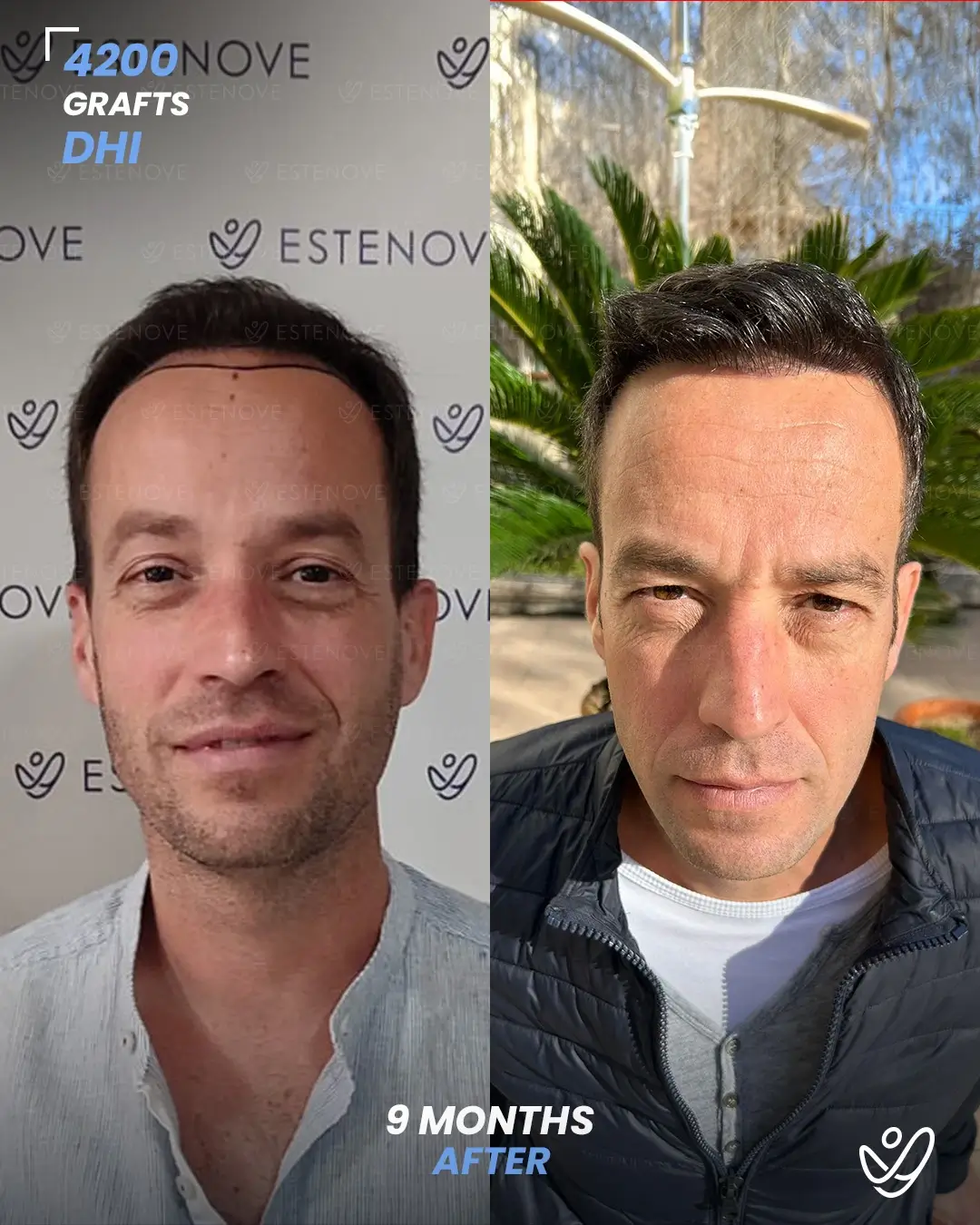
Most patients experience shedding within the first month, followed by new growth at 3–4 months. Density improves at 6–9 months, and final results are visible one year after hair transplant.2 With 4000 grafts, patients can expect transformative results: a natural hairline, strong density in the mid-scalp, and partial crown coverage depending on donor capacity.
-

- FUE 4000 Grafts
-
- Beard transplant – 4000 grafts – 9 months before after
-
- Male FUE 3900 Grafts 6 Months Before&After
-
- Male FUE 4100 grafts 11 Months Before&After
-
- 4200 graft FUE 6 months before & after hair transplant
-
- Mega 4200 Grafts
-

- 4200 graft DHI 9 months before & after hair transplant
-
- 4200 graft DHI 9 months before & after hair transplant
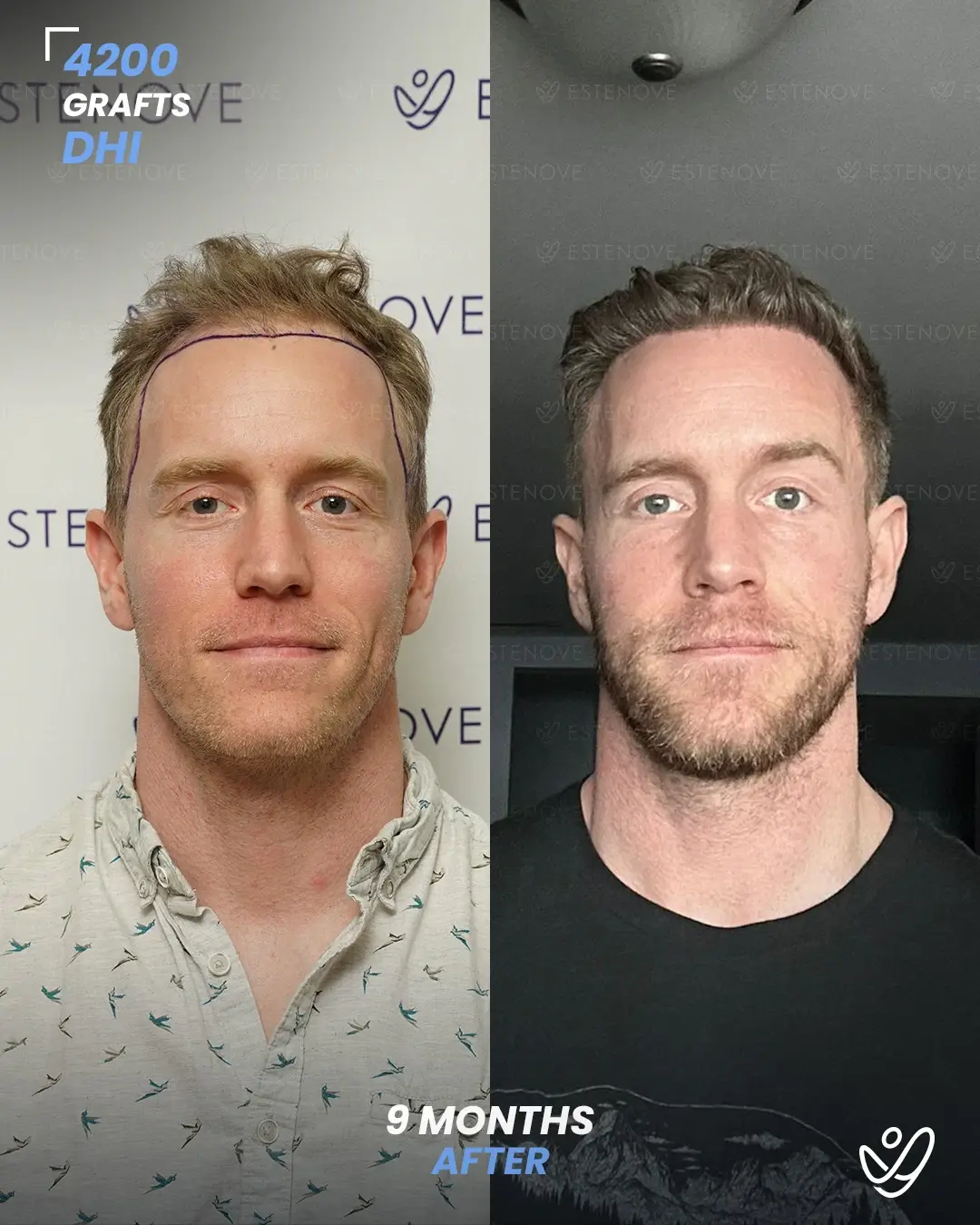
Explore real results: Visit our Before & After page to filter transformations by graft numbers and technique.
Key Takeaway
A 4000 grafts hair transplant is a transformative procedure that can restore the frontal and mid-scalp, with partial crown filling possible. It is not considered overharvesting when performed by experienced surgeons who respect donor safety. Turkey offers one of the best balances of cost, expertise, and patient care, making it the top choice for large sessions.
Sources
- Garg, A., & Garg, S. (2021). Overview of Follicular Extraction. Indian journal of plastic surgery : official publication of the Association of Plastic Surgeons of India, 54(4), 456–462. https://doi.org/10.1055/s-0041-1739244
- Mysore V. (2013). Direct Hair Transplantation (DHT): An Innovative Follicular Unit Extraction (FUE) Technique of Hair Transplantation. Journal of cutaneous and aesthetic surgery, 6(2), 106.
- True R. H. (2021). Is Every Patient of Hair Loss a Candidate for Hair Transplant? Indian Journal of Plastic Surgery, 54(4), 435–440. https://doi.org/10.1055/s-0041-1739247
- Park, J. H., You, S. H., Kim, N. R., & Ho, Y. H. (2021). Long hair follicular unit excision: personal experience. International journal of dermatology, 60(10), 1288–1295. https://doi.org/10.1111/ijd.15648
- Wall D., Meah N., Fagan N., York K., Sinclair R. (2022). Advances in Hair Growth. Faculty Reviews, 11, 1. https://doi.org/10.12703/r/11-1