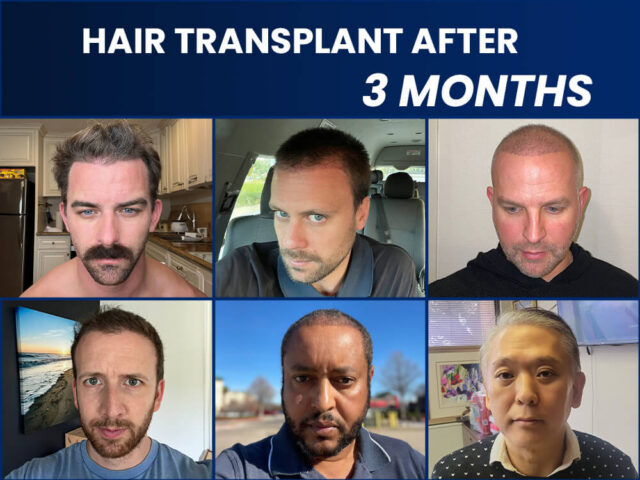


Key Takeaways
-
The Look: Often patchy, thin, and sparse. This is known as the “Ugly Duckling” phase.
-
The Feeling: Itchiness and “pimples” (ingrown hairs) are common signs of new growth pushing through.
-
The Growth: You likely only see 10–15% of your new hair. It will be fine and colorless.
-
The Verdict: Do not judge your result yet. The real cosmetic change begins in Month 4.
What should you expect 3 months after a hair transplant? This is when early regrowth begins, shedding subsides, and signs of progress start to appear. In this guide, we break down the typical symptoms, expected growth, recovery tips, and real photos from 3-month transformations.
What to Expect: Hair Transplant 3 Months Results & The Turning Point
By the third month, most patients exit the shock loss phase. While you might not see dramatic density yet, it’s common to notice:
- Early regrowth of fine, thin hair
- Mild redness or occasional bumps on the scalp
- Itching as hair follicles activate
- Uneven growth (some areas progress faster)
Many patients worry about hair transplant 3 months shedding. It is normal to feel disappointed at Month 3. You have lost the transplanted hairs (shock loss) and the new ones are just ‘baby fuzz’. This is the hardest month mentally, but it is the turning point.
Many patients are unsure if their procedure is working yet but month 3 is where visible change starts to happen. Your hair follicles have been in the Telogen (Resting) phase since the surgery. This phase biologically lasts about 100 days. Month 3 is simply your follicles waking up from their nap.
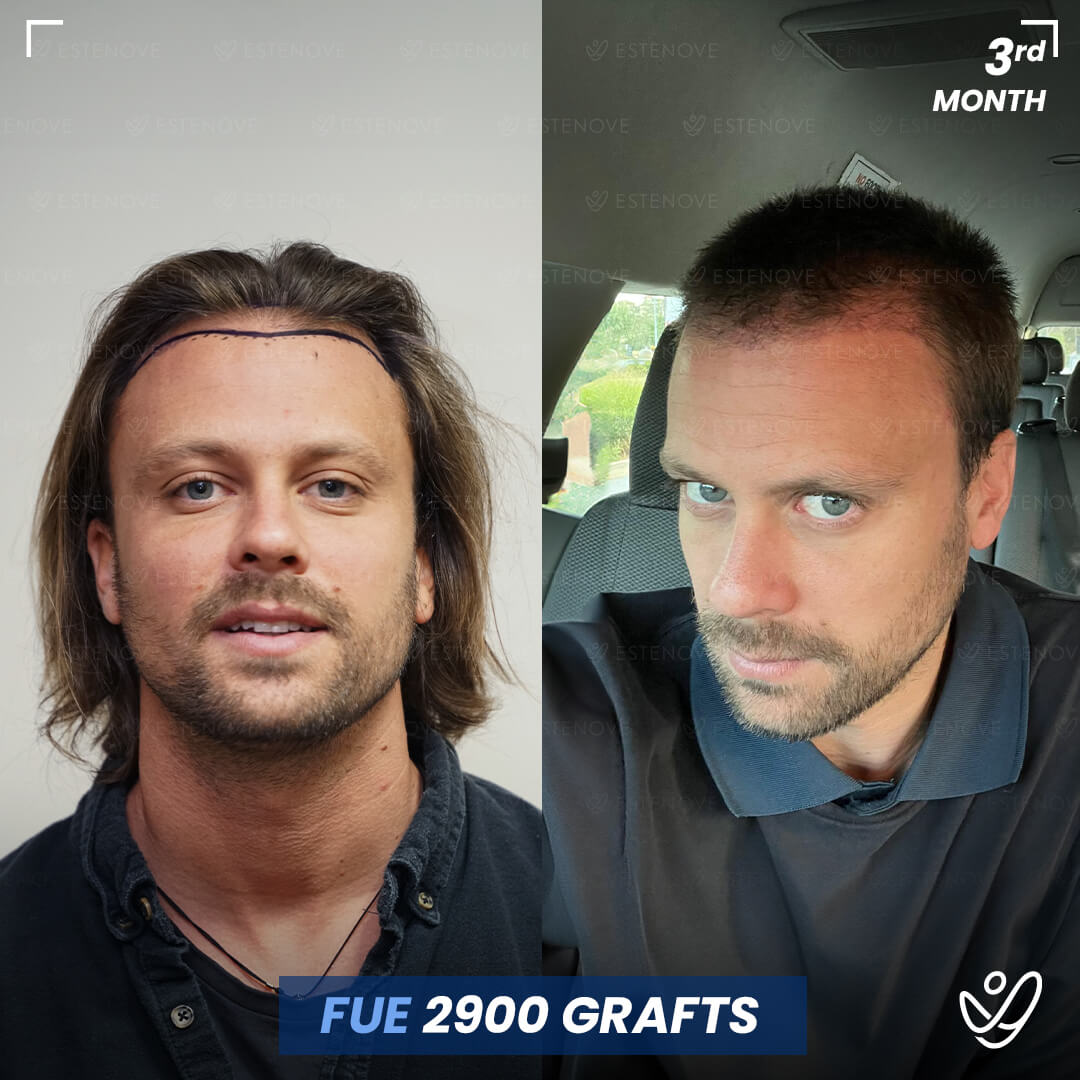
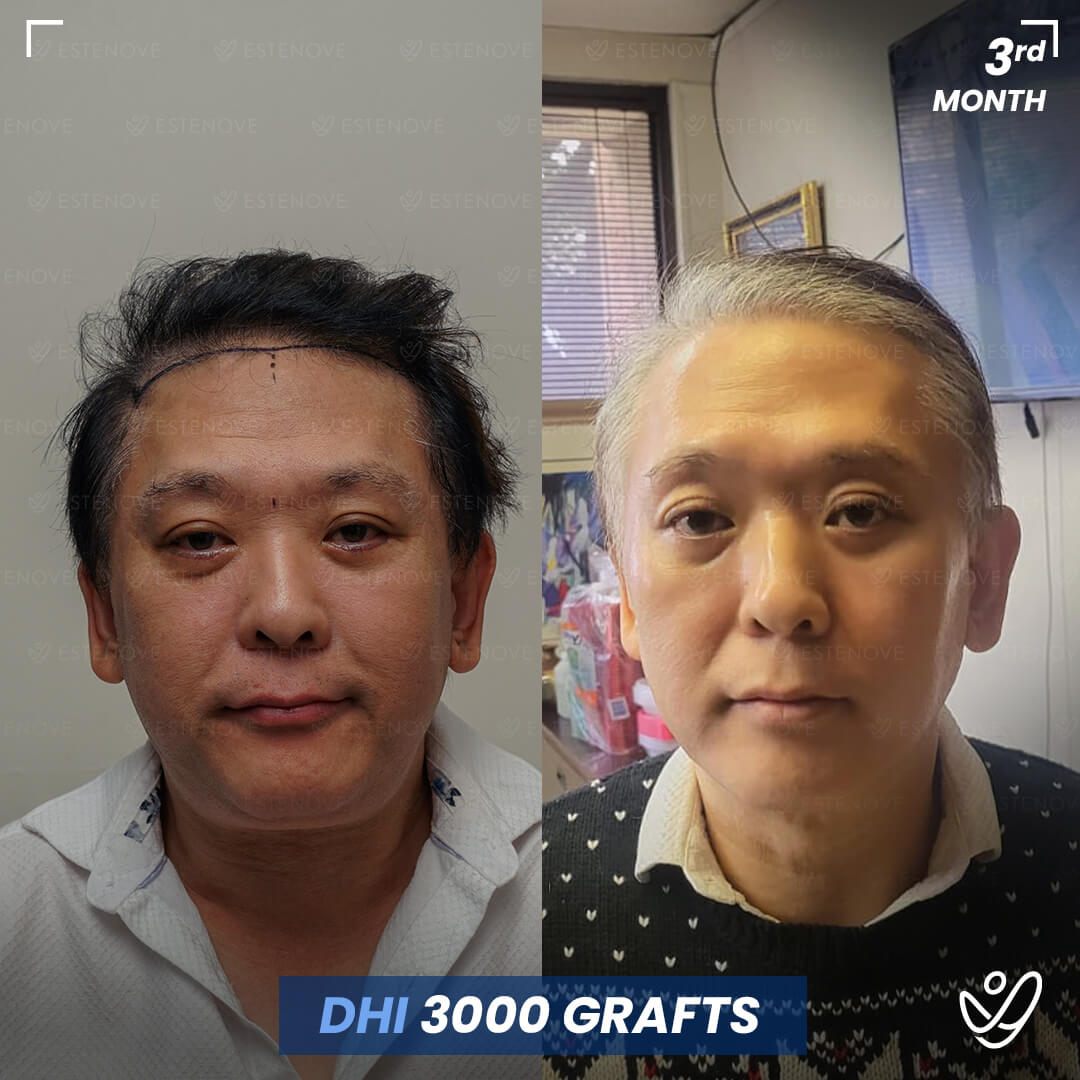
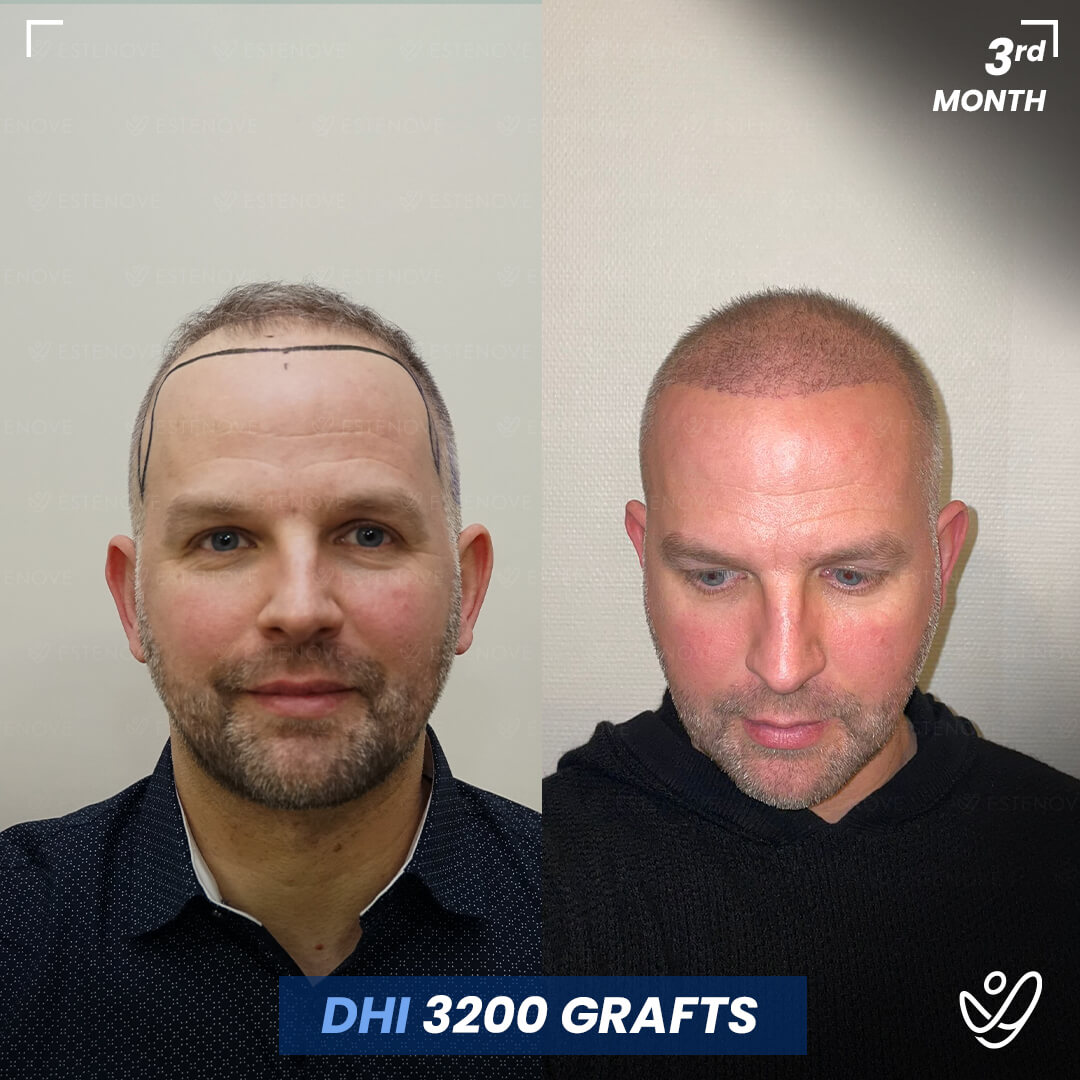
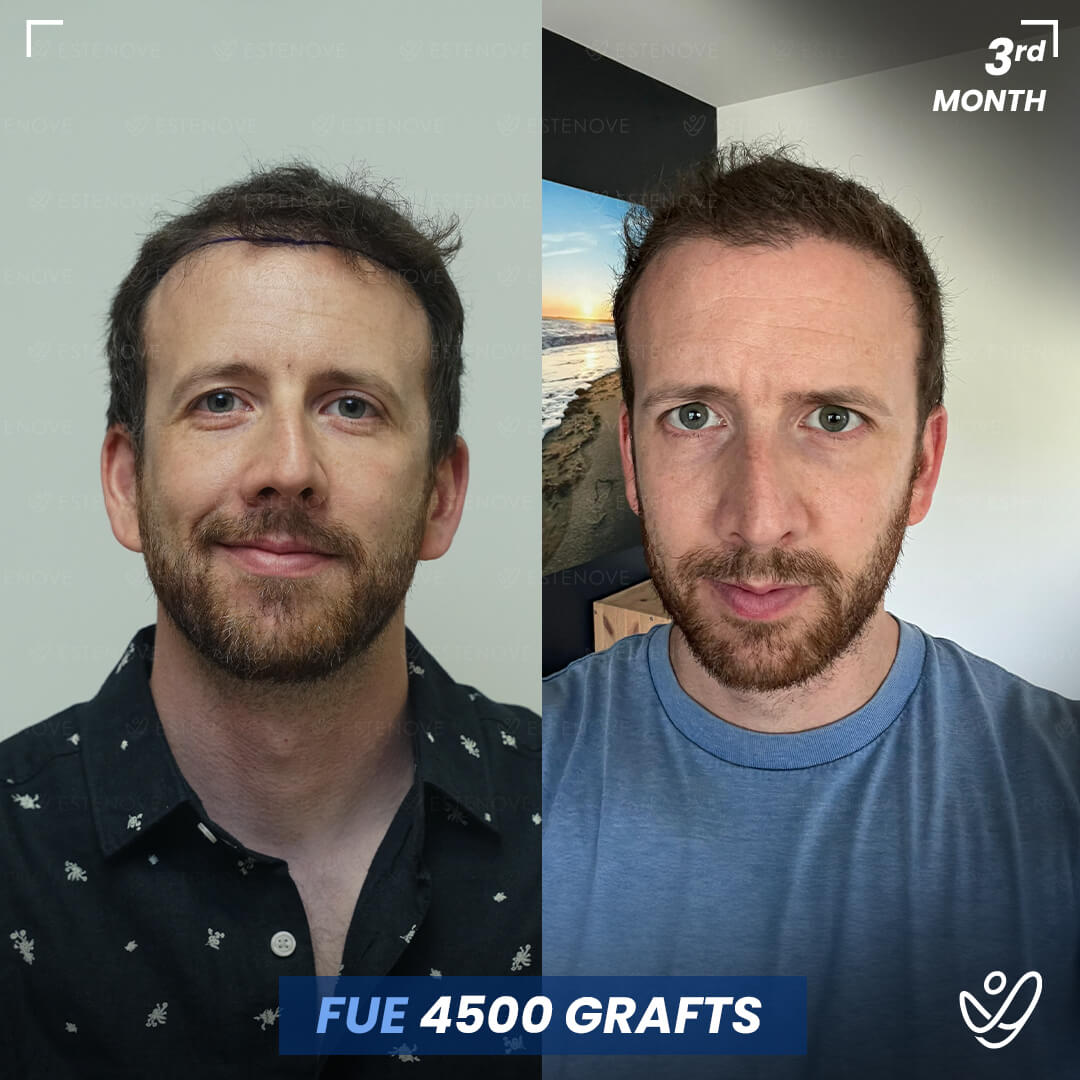
Real 3-Month Results: Before & After Photos
Take a look at actual patient results around the 3-month mark. These show early-stage regrowth, especially in the frontal and crown zones. Final thickness comes much later—but this is when the transformation begins.
Hair Growth Timeline: Month-by-Month
| Time After Surgery | What to Expect |
|---|---|
| 1 Month | Scabbing, redness, crusting |
| 3 Months | Thin new hairs emerge, uneven progress |
| 6 Months | Visible thickening, faster growth |
| 9 Months | Significant coverage, natural texture |
| 12 Months | Full density and natural blending |
How to Care for Hair at 3 Months
- Use sulfate-free, pH-balanced shampoo
- Avoid harsh gels, sprays, or dyes
- Gently massage scalp 2–3x per week
- Protect scalp from strong sunlight
- Do not scratch or pick at new follicles
We include an aftercare kit in every package to support this stage. View our pricing page for full details.
Common Concerns & Patient Questions
Is it normal for the hair to be thin?
Yes. New hair often starts out soft, fine, and even curly. It thickens in the following months.
Can I cut or trim new hair?
You may trim carefully, but avoid shaving or harsh styling.
Should I start PRP or supplements?
Month 3 is a good time to begin supportive treatments like PRP therapy, biotin, or zinc supplements (if approved by your doctor).
Is uneven growth a bad sign?
No, it’s completely normal. Each follicle grows at a slightly different pace.
When to Worry: Signs You Should Contact Your Doctor
- No new hair growth by month 4
- Persistent redness, swelling, or pain
- Pus or signs of infection at recipient sites
- Scabs that don’t fall off naturally after 3+ weeks
If you notice these symptoms, schedule a check-in with your surgeon. Most issues are minor and treatable when addressed early.
Success Stories
Want to see how others looked at 3, 6, 9, or 12 months after surgery? Visit Hair Transplant Recovery Timeline (1 to 12 Month) or watch real patient transformations in our before/after video playlist below. For full case studies and documented hair transplant journeys, visit our success stories page.
Looking Ahead: Months 4 and Beyond
After month 3, results accelerate. Hair becomes thicker, darker, and blends naturally. When comparing hair transplant 3 months vs 6 months, the difference is night and day. Right now, you are seeing the first sprouts; by month 6, you will see actual cosmetic coverage. Between 6–9 months, most patients report noticeable coverage and improvement.
Final outcomes—like natural hairline design, crown coverage, and styling ability—are typically visible around 12 months.
- Hair Transplantation: Basic Concepts and New Advances – NCBI https://pmc.ncbi.nlm.nih.gov/articles/PMC6388556/
- Hair Transplant Surgery – American Academy of Dermatology https://www.aad.org/public/diseases/hair-loss/treatment/transplant
- International Society of Hair Restoration Surgery (ISHRS) Forum, Vol. 26, Issue 5 https://www.ishrs-htforum.org/content/htfi/26/5/local/front-matter.pdf
Medical Disclaimer: The timeline described in this hair transplant after 3 months guide represents the typical biological progression. Individual growth rates vary. This content was medically reviewed by the Estenove Clinical Team.