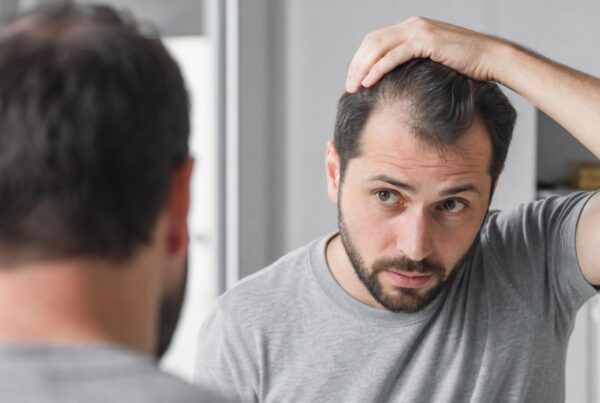
Your hair is thinning, your diet is clean, and your stress levels are managed, yet clumps keep appearing in the shower drain. For millions of people, hair loss is the first visible sign of a thyroid disorder they didn’t know they had. Up to 50% of patients with untreated thyroid disorders experience noticeable hair loss, making the thyroid gland one of the most overlooked culprits behind diffuse thinning. Understanding the causes of thyroid-related hair loss and the treatment options available can mean the difference between years of frustration and a clear path to regrowth. The reassuring truth: in most cases, this type of shedding is temporary and reversible once the underlying hormonal imbalance is corrected. The key is recognizing the connection early and acting on it with precision.
Understanding the Link Between Thyroid Disease and Hair Loss
The thyroid gland, a butterfly-shaped organ at the base of the neck, produces hormones (T3 and T4) that regulate metabolism in virtually every cell, including hair follicle cells. When thyroid hormone output swings too high or too low, hair follicles lose the metabolic signals they need to cycle through growth, rest, and shedding phases in an orderly way. The result is a disruption that pushes an abnormally large percentage of follicles into the resting (telogen) phase simultaneously, a condition called telogen effluvium. This is not localized balding like male-pattern hair loss; it is diffuse thinning spread across the entire scalp, and sometimes even the eyebrows and body hair.
How Hypothyroidism and Hyperthyroidism Disrupt the Hair Growth Cycle
Hypothyroidism, or underactive thyroid, is the more common offender. When T3 and T4 levels drop, the anagen (growth) phase of the hair cycle shortens while the telogen (resting) phase lengthens. Follicles essentially go dormant. New hairs stop replacing the ones that naturally shed each day, and the net effect is visible thinning over weeks to months. Hypothyroidism affects roughly 10% of women and 3% of men over 40, which means a significant portion of the population is at risk for this exact mechanism.
Hyperthyroidism works differently but produces a similar outcome. Excess thyroid hormones accelerate the hair cycle so aggressively that follicles burn through the growth phase too quickly, leading to premature shedding. Hair becomes finer, more brittle, and breaks easily. Whether the thyroid is overactive or underactive, the follicle’s normal rhythm is thrown off balance.
The Impact of Hashimoto’s Disease and Autoimmune Hair Thinning
Hashimoto’s thyroiditis deserves special attention because it combines hormonal disruption with autoimmune inflammation. In Hashimoto’s, the immune system attacks thyroid tissue, gradually destroying the gland’s ability to produce hormones. But the autoimmune component doesn’t always stop at the thyroid. Patients with Hashimoto’s are 3.5 times more likely to develop alopecia areata, a condition where the immune system targets hair follicles directly, causing patchy bald spots.
This dual threat means Hashimoto’s patients can experience both diffuse telogen effluvium from low thyroid hormones and focal patches of alopecia areata from autoimmune activity. Identifying which mechanism is driving the hair loss matters because treatment strategies differ. Telogen effluvium responds to hormone replacement, while alopecia areata may require immunomodulatory therapies or corticosteroid injections.
Identifying Symptoms and Patterns of Thyroid-Related Thinning
Thyroid-driven hair loss has a distinct signature that sets it apart from genetic hair loss or nutritional deficiencies. The thinning is diffuse: it affects the entire scalp rather than concentrating at the temples or crown. You may notice your ponytail feels thinner, your part line widens, or you see more scalp through your hair under bright light. Eyebrow thinning, particularly the outer third, is a classic red flag that points specifically toward hypothyroidism.
Other symptoms often accompany the shedding. Hypothyroid patients frequently report fatigue, weight gain, dry skin, cold intolerance, and brain fog. Hyperthyroid patients may experience weight loss, anxiety, rapid heartbeat, and heat sensitivity. If hair loss appears alongside any of these clusters, thyroid testing should be a priority. As medical experts have noted, hair fall can serve as an early warning of thyroid dysfunction, and tests including TSH, Free T3, Free T4, and thyroid antibody screening provide a clear diagnostic picture.
A simple way to track your own progression: take monthly photos of your hairline and part under consistent lighting. This creates an objective visual timeline that helps both you and your physician assess whether shedding is accelerating, stabilizing, or reversing.
Effective Thyroid Hair Loss Treatment and Recovery Strategies
Treating hair loss caused by thyroid dysfunction must start with addressing the root cause: the thyroid problem itself. Topical serums and volumizing shampoos may improve the appearance of thinning hair temporarily, but no cosmetic product can override a hormonal imbalance. The treatment plan should be built from the inside out.
Medical Interventions and Balancing Hormone Levels
For hypothyroidism, the standard treatment is synthetic levothyroxine (T4), dosed to bring TSH levels into the optimal range, typically between 0.5 and 2.5 mIU/L for most adults. Some patients also benefit from combination therapy that includes liothyronine (T3). Dosage adjustments happen over 6 to 8 week intervals, guided by blood work.
For hyperthyroidism, treatment may involve antithyroid medications like methimazole, radioactive iodine therapy, or in some cases surgery. The goal is the same: restore hormone levels to a range where follicles can resume their normal growth cycle.
Hair regrowth typically follows a predictable timeline once hormones stabilize:
- Weeks 1 to 8: Shedding gradually slows as follicles exit the telogen phase.
- Months 3 to 4: Fine vellus hairs begin emerging at the scalp.
- Months 6 to 12: Noticeable improvement in density and thickness.
- Month 12 and beyond: Full regrowth for most patients, though texture may differ slightly from pre-loss hair.
The hair loss is typically reversed after thyroid hormone levels are normalized, but patience is essential. Hair grows at roughly 1 centimeter per month, so visible results take time.
Nutritional Support and Supplements for Regrowth
Thyroid patients are frequently deficient in specific nutrients that directly affect hair health. Targeted supplementation can accelerate regrowth once hormone levels are corrected:
- Iron and ferritin: Ferritin levels below 40 ng/mL are associated with increased shedding. Aim for 70 ng/mL or higher.
- Zinc: Supports keratin production and follicle integrity. A daily intake of 15 to 30 mg is typical for deficiency correction.
- Selenium: Critical for T4-to-T3 conversion. Brazil nuts provide roughly 70 to 90 mcg per nut; two daily can meet requirements.
- Biotin: While not a thyroid-specific nutrient, 2,500 to 5,000 mcg daily supports keratin infrastructure.
- Vitamin D: Deficiency is common in autoimmune thyroid patients. Levels should be maintained above 40 ng/mL.
Always test before supplementing. Excess selenium or iodine can worsen thyroid function, turning a solution into a new problem.
Long-Term Management and Hair Care Tips for Thyroid Patients
Consistent thyroid management is the foundation, but day-to-day hair care choices matter too. Thinning hair is fragile, and aggressive styling accelerates breakage.
Reduce heat styling to no more than twice per week, and always apply a heat protectant. Avoid tight hairstyles that create traction on weakened follicles: loose braids and low ponytails are safer options. Sulfate-free shampoos prevent stripping the natural oils that already-dry thyroid hair desperately needs.
For cosmetic camouflage during the regrowth phase, keratin-based hair fibers applied to the part line create the appearance of density within seconds. A collarbone-length cut with layers adds volume and movement, making thinning less visible. Dry shampoo at the roots provides lift between washes.
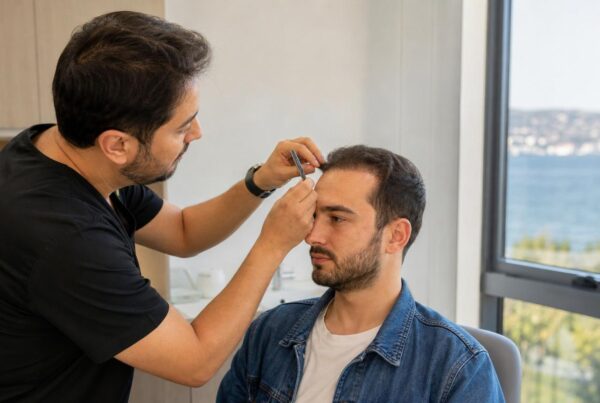
Patients who have experienced prolonged or severe thyroid-related thinning and find that regrowth plateaus after 12 to 18 months of stable hormone levels may want to explore more permanent restoration options. Clinics like Estenove in Istanbul specialize in advanced transplant techniques, including FUE and DHI, that can restore density in areas where follicles have been damaged beyond hormonal recovery.
Schedule thyroid blood work every 6 to 12 months even after stabilization. Hormonal needs shift with age, pregnancy, menopause, and stress, and catching a drift early prevents another round of shedding.
FAQ
In the vast majority of cases, no. Thyroid-related hair loss is a form of telogen effluvium, which is temporary. Once hormone levels are corrected and maintained, follicles re-enter the growth cycle. Permanent loss is rare and typically only occurs with prolonged untreated autoimmune conditions like alopecia areata associated with Hashimoto’s disease.
Look for diffuse thinning across the entire scalp rather than isolated bald patches or a receding hairline. Thinning of the outer eyebrows is a strong indicator. Accompanying symptoms like fatigue, weight changes, or temperature sensitivity further suggest a thyroid connection. A blood panel measuring TSH, Free T3, Free T4, and thyroid antibodies will confirm or rule out the diagnosis.
Yes, for most patients. Normalizing thyroid hormone levels allows follicles to resume their natural growth cycle. The reversal is not instant: expect 6 to 12 months for meaningful regrowth after hormones stabilize.
Shedding typically slows within 6 to 8 weeks of reaching optimal hormone levels. New growth becomes visible around months 3 to 4, and significant improvement in density usually occurs between months 6 and 12.
Hypothyroidism is more commonly associated with hair loss, largely because it is more prevalent and often goes undiagnosed for longer periods. However, both hypothyroidism and hyperthyroidism disrupt the hair cycle, and either condition can produce significant thinning if left untreated.