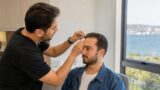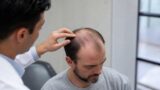

Most men who eventually lose significant hair had a moment, usually in their mid-twenties, when they noticed their hairline shifting. That moment often corresponds to Norwood Type 2, the earliest clinically recognized stage of male pattern baldness on the Hamilton-Norwood scale. The good news: catching hair loss at this stage gives you the widest range of treatment options and the best chance of keeping your hair for decades. According to the International Society of Hair Restoration Surgery’s 2025 practice census, roughly 47% of men seeking professional hair loss consultations present at Norwood 2 or 3, yet only a fraction of those at stage 2 actually require surgical intervention. The rest respond well to medical therapy, lifestyle changes, and clinical treatments that can halt or reverse early thinning. Understanding the early signs of Norwood 2 hair loss and knowing which treatment paths are backed by evidence is the single most valuable step you can take. This piece breaks down identification, non-surgical protocols, clinical interventions, and long-term strategies so you can act before the window of easy intervention closes.
Identifying Norwood Type 2 Hair Loss
The Norwood scale classifies male pattern baldness into seven stages, with Type 1 representing a full, juvenile hairline and Type 7 representing extensive baldness across the top and crown. Norwood Type 2 sits right at the threshold: the hairline has receded slightly around the temples, forming a subtle M-shape or widow’s peak. It is the stage most often confused with a normal mature hairline, which is exactly why so many men miss it.
A 2024 study published in the Journal of Dermatological Science found that 62% of men between 25 and 35 had some degree of temporal recession, but only about half of those showed the miniaturization patterns consistent with true androgenetic alopecia. The distinction matters enormously because a mature hairline requires no treatment at all, while genuine Norwood 2 hair loss is a progressive condition that will advance without intervention.
The Difference Between a Mature Hairline and Norwood 2
Every man’s hairline changes after puberty. The juvenile hairline, which sits low on the forehead with rounded corners, typically moves upward by 1 to 1.5 centimeters during the late teens and early twenties. This shift is called maturation, and it is not hair loss. A mature hairline sits roughly one finger-width above the highest wrinkle on your forehead when you raise your eyebrows. It may have slight temporal recession, but the density behind the hairline remains uniform.
Norwood 2 looks similar at first glance, but the key difference is miniaturization. Under a dermatoscope at 20x to 70x magnification, a dermatologist can see that hairs in the temporal region are becoming thinner in diameter, shorter in length, and lighter in color. These vellus-like hairs are being starved by dihydrotestosterone (DHT), which binds to androgen receptors in genetically susceptible follicles and gradually shortens the anagen (growth) phase of the hair cycle.
A practical self-check: pull a few shed hairs from your temples and compare them to hairs from the back of your head. If the temple hairs are noticeably thinner and shorter, miniaturization is likely underway. You can also part your hair at the temples under bright, consistent lighting and photograph the area monthly. Over three to six months, thinning will become visible in photos even when it is hard to notice in the mirror.
Early Stage Hair Loss Symptoms to Watch For
Beyond temple recession, Norwood 2 can present with several less obvious signs:
- Increased shedding during showering or brushing, particularly hairs shorter than 3 centimeters
- A widening part line at the frontal scalp, even if the hairline itself looks intact
- Scalp visibility under direct overhead light that was not present a year ago
- An itchy or tight sensation across the frontal scalp, sometimes linked to inflammation around miniaturizing follicles
- Family history on either side: the androgen receptor gene sits on the X chromosome, so maternal history is especially predictive, but paternal patterns matter too
Dr. Robert Bernstein of Bernstein Medical has noted that early-stage patients often dismiss these signs as stress-related or seasonal shedding. The critical differentiator is duration: telogen effluvium (stress shedding) resolves within three to six months, while androgenetic alopecia is persistent and progressive. If shedding or thinning continues beyond six months without an identifiable trigger like surgery, illness, or extreme dieting, a professional evaluation is warranted.
Non-Surgical Norwood 2 Treatment Options
For the vast majority of men at Norwood 2, medical therapy is the first and often only line of defense needed. The goal at this stage is not restoration but preservation: stopping further miniaturization and, ideally, reversing some of the thinning that has already occurred. Two FDA-approved medications form the backbone of early stage hair loss treatment, and their efficacy is well documented across decades of clinical data.
The economics also favor early action. A monthly regimen of generic finasteride and over-the-counter minoxidil costs between $15 and $40 per month in 2026, depending on your pharmacy and country. Compare that to the $4,000 to $15,000 price range of a hair transplant, and the financial case for catching things early becomes obvious.
Combining Finasteride and Minoxidil for Maximum Efficacy
Finasteride is a 5-alpha reductase inhibitor that blocks the conversion of testosterone to DHT. At the standard 1 mg daily dose, it reduces scalp DHT levels by approximately 60 to 70 percent. A landmark 10-year follow-up study published in the European Journal of Dermatology showed that 86% of men who took finasteride continuously maintained or improved their hair count over the full study period.
Minoxidil works through a completely different mechanism. Applied topically at 5% concentration (the standard men’s dose), it acts as a potassium channel opener that increases blood flow to follicles and extends the anagen phase. It does not address DHT, which is precisely why combining it with finasteride produces better results than either drug alone.
A protocol that dermatologists like Dr. Alan Bauman frequently recommend for Norwood 2 patients:
- Finasteride 1 mg orally, once daily, taken at the same time each day
- Minoxidil 5% topical solution or foam, applied to the frontal and temporal scalp twice daily (or once daily with the newer 5% foam formulations that show comparable efficacy in single-application studies)
- A ketoconazole 2% shampoo used two to three times per week, which has mild anti-androgenic properties at the follicular level and reduces scalp inflammation
Expected timeline: shedding may increase during the first four to eight weeks as miniaturized hairs are pushed out by new anagen hairs. Visible thickening typically begins at three to four months. Full results take 12 to 18 months to assess. Monthly photographs taken under consistent lighting are the most reliable way to track progress, since day-to-day mirror checks are unreliable.
Side effects deserve an honest discussion. Roughly 2 to 4 percent of men on finasteride report sexual side effects such as reduced libido or erectile changes. In most cases, these resolve after discontinuation or dose reduction. Some clinicians now prescribe 0.5 mg daily or three-times-weekly dosing as an alternative that reduces side effect risk while retaining most of the DHT suppression. Topical finasteride (0.25% concentration) has also emerged as an option that delivers significant scalp DHT reduction with lower systemic absorption, based on a 2023 randomized controlled trial in the Journal of the American Academy of Dermatology.
Lifestyle Adjustments and Scalp Health
Medication handles the hormonal driver, but the environment around the follicle matters too. Chronic inflammation, poor circulation, and nutritional deficiencies can accelerate thinning even in men on finasteride and minoxidil.
Specific adjustments that have clinical support:
- Ferritin levels below 40 ng/mL have been associated with increased hair shedding, even in men. A simple blood test can identify this, and supplementation with 65 mg of elemental iron daily (taken with vitamin C for absorption) can correct it within three months.
- Vitamin D deficiency, defined as serum levels below 30 ng/mL, is linked to disrupted hair cycling. A 2025 meta-analysis in Nutrients found that men with androgenetic alopecia had significantly lower vitamin D levels than matched controls.
- Scalp microcirculation improves with regular exercise. Three to five sessions per week of moderate cardiovascular activity have been shown to reduce cortisol and improve peripheral blood flow.
- Avoid tight hairstyles and aggressive brushing at the temples, which can compound traction-related loss on top of androgenetic thinning.
- Smoking constricts blood vessels supplying the dermal papilla. A Japanese study of over 700 men found a statistically significant correlation between smoking intensity and severity of androgenetic alopecia.
Think of lifestyle modifications as the supporting cast: they will not replace finasteride or minoxidil, but they create the biological conditions in which those treatments perform best.
Surgical and Clinical Interventions
Not every Norwood 2 patient needs a procedure, but some men want faster or more dramatic results than medication alone can deliver. The clinical options available in 2026 range from minimally invasive therapies like PRP to full surgical transplants, and the right choice depends on the degree of miniaturization, the patient’s goals, and their willingness to commit to ongoing medical therapy alongside any procedure.
Is a Hair Transplant Necessary for Norwood 2?
The short answer for most men: no, not yet. A hair transplant at Norwood 2 carries specific risks that experienced surgeons take seriously. The primary concern is future progression. If a surgeon designs a hairline for a 28-year-old at Norwood 2 and that patient progresses to Norwood 5 by age 45, the transplanted hairline may look isolated and unnatural against the receding native hair behind it.
That said, there are cases where a small transplant makes sense at this stage. Men with a strong family history suggesting they will stabilize at Norwood 2 or 3, who have been on finasteride for at least 12 months with stable hair counts, and who have specific aesthetic goals for their temple points are reasonable candidates. The procedure would typically involve 800 to 1,200 grafts using FUE (follicular unit extraction) or DHI (direct hair implantation), focused exclusively on the temporal triangles.
Clinics like Estenove in Istanbul, which specialize in FUE and DHI techniques, often counsel Norwood 2 patients to stabilize on medication first and revisit the surgical conversation after 12 to 18 months of documented stability. This approach protects the patient from over-transplanting at a stage where the final pattern of loss is not yet clear. Reputable clinics will also discuss donor area limitations: even the densest donor zone contains a finite number of grafts, and using them too early can leave insufficient reserves for future sessions.
Questions to ask any surgeon considering a transplant at this stage:
- What is your refusal rate for Norwood 2 patients? (A good surgeon turns away a significant percentage)
- How many grafts do you recommend, and what is your rationale for that number?
- Will I need to continue finasteride after the transplant?
- What happens if my hair loss progresses beyond your current plan?
Platelet-Rich Plasma (PRP) and Laser Therapy
PRP therapy involves drawing 10 to 20 mL of the patient’s blood, processing it in a centrifuge to concentrate the platelet fraction to three to five times baseline levels, and injecting the resulting plasma into the scalp at 1 cm intervals using a 30-gauge needle at a depth of approximately 1.5 mm. The concentrated growth factors, including PDGF, VEGF, and TGF-beta, trigger a cascade of healing responses that stimulate dormant follicles and extend the anagen phase.
A 2025 systematic review in Dermatologic Surgery analyzed 18 randomized controlled trials and concluded that PRP produced a statistically significant increase in hair density and thickness compared to placebo, with the best results seen in patients at Norwood 2 and 3. The typical protocol is three sessions spaced four to six weeks apart, followed by maintenance sessions every six to twelve months.
Low-level laser therapy (LLLT) is another non-surgical option with FDA clearance. Devices range from in-clinic panels to at-home caps and helmets emitting light at 650 to 670 nm wavelengths. The mechanism involves photobiomodulation of cytochrome c oxidase in the mitochondria of follicular cells, which increases ATP production and cellular metabolism. Clinical trials show modest but measurable improvements in hair count, typically a 10 to 20 percent increase over six months when used consistently for 20 to 25 minutes per session, three times per week.
Neither PRP nor LLLT replaces finasteride and minoxidil. They work best as adjuncts. A Norwood 2 patient on a combined medical and PRP protocol will generally see better results than one relying on any single therapy.
Long-Term Management and Prevention Strategies
Hair loss at Norwood 2 is not a problem you solve once: it is a condition you manage over years. The men who keep their hair into their fifties and sixties are the ones who started treatment early, stayed consistent, and adjusted their protocol as new evidence and options emerged.
A practical long-term framework looks like this:
- Months 1 through 18: establish a baseline with medical therapy (finasteride, minoxidil, ketoconazole shampoo). Take monthly photographs of the hairline and part under identical lighting. Get a dermatoscopic assessment at baseline and at 12 months.
- Year 2 through 5: if stable, continue the regimen. Consider adding PRP annually if budget allows. Reassess with a hair loss specialist every 12 to 18 months.
- Year 5 and beyond: if progression occurs despite medical therapy, evaluate surgical options with a qualified surgeon who understands long-term planning. Oral dutasteride (0.5 mg), which inhibits both type I and type II 5-alpha reductase, may be considered for non-responders to finasteride under specialist supervision.
Emerging therapies are expanding the toolkit. Topical clascoterone, a first-in-class topical androgen receptor inhibitor approved for acne and currently in late-stage trials for androgenetic alopecia, may offer a new mechanism of action by 2027. Wnt pathway activators and exosome-based treatments are in earlier stages of research but show promise in preclinical models.
The psychological dimension deserves attention too. A 2024 survey by the American Hair Loss Association found that 73% of men experiencing early hair loss reported a measurable impact on self-confidence. Recognizing that Norwood 2 is common, treatable, and not a reflection of aging or health failure is an important part of managing the condition. You are not fighting a losing battle: you are managing a well-understood biological process with effective tools.
The single most important takeaway: time is your most valuable asset. Every month you delay treatment at Norwood 2 is a month of miniaturization that becomes harder to reverse. Start with a dermatologist consultation, get a baseline assessment, and begin a protocol that fits your risk tolerance and budget. The data overwhelmingly supports early intervention, and the men who act on that data are the ones who keep their hair.