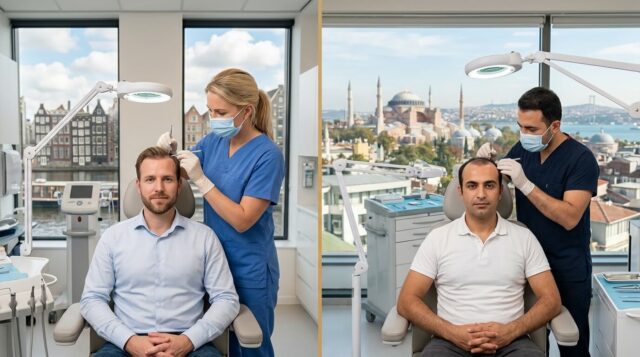

Thousands of men and women across Europe face the same crossroads every year: do they book a hair transplant at a clinic close to home, or do they fly to Istanbul and save thousands of euros? The Netherlands and Turkey sit at opposite ends of the pricing spectrum, but cost is only one variable in a decision that affects your appearance for decades. Surgeon skill, regulatory oversight, aftercare logistics, and the total patient experience all matter just as much as the number on the invoice. This comparison strips away the marketing noise and lays out the practical differences between getting a hair transplant in the Netherlands versus Turkey, so you can weigh the trade-offs with clear eyes. Whether you are based in Amsterdam, Rotterdam, or anywhere else in the EU, the facts below should help you move forward with confidence rather than guesswork.
Comparing Hair Transplant Cost Netherlands vs Turkey
Price is the first thing most patients research, and the gap between these two countries is hard to ignore. Understanding exactly what you pay for in each market prevents unpleasant surprises and helps you compare quotes on a like-for-like basis.
The All-Inclusive Package Model in Istanbul
Turkish clinics have built an entire industry around medical tourism, and the pricing model reflects that. A typical Istanbul hair transplant package costs between €1,800 and €3,000 for an FUE procedure of 3,000 to 4,500 grafts. That figure usually covers the surgery itself, a three-night hotel stay, airport-to-clinic transfers, pre-operative blood tests, post-operative medications, and sometimes even a PRP session.
The reason Turkey can offer these prices comes down to lower operating costs, favorable exchange rates, and sheer volume. Istanbul alone is home to hundreds of clinics, and the competition keeps margins thin. A surgeon at a high-volume clinic may perform two or three procedures per day, which distributes fixed costs across many patients.
Not every package is identical, though. Some clinics include a single PRP treatment while others bundle three sessions over the following year. Accommodation quality varies from budget hotels near the Fatih district to four-star properties in Şişli or Nişantaşı. Always request a written breakdown of what the quoted price includes before you commit. Items to confirm: the maximum graft count covered, whether sapphire-tip blades or standard steel punches are used, the surgeon’s personal involvement versus technician-led extraction, and whether follow-up consultations are remote or in-person.
Price Per Graft and Consultation Fees in Holland
Dutch clinics operate on a fundamentally different pricing structure. Most charge per graft, with rates typically falling between €3 and €6 per graft depending on the technique. An FUE transplant of 3,000 grafts in the Netherlands therefore lands somewhere between €9,000 and €18,000. Some clinics in Amsterdam and Rotterdam charge a separate initial consultation fee of €50 to €150, which may or may not be deducted from the final surgery cost.
The hair transplant cost in the Netherlands reflects higher labor costs, stricter facility requirements, and smaller patient volumes per clinic. Dutch surgeons often limit themselves to one procedure per day, which means the overhead of the operating room, nursing staff, and equipment is borne by a single patient. Health insurance in the Netherlands classifies hair transplants as cosmetic, so coverage is virtually nonexistent.
One financial consideration patients overlook is the indirect cost of traveling to Turkey: flights from Amsterdam Schiphol to Istanbul typically run €150 to €350 return, but you also need to factor in lost work days, travel insurance, and the possibility of a return trip if complications arise. Even with those extras, the total cost of a Turkish procedure usually stays well below the Dutch equivalent, often by a factor of three to five.
Quality Standards and Best Hair Clinic Amsterdam Selection
Price means nothing if the result looks unnatural or, worse, causes permanent scarring. Understanding how each country regulates its clinics and surgeons is essential to making a safe choice.
Dutch Medical Regulations and Safety Protocols
The Netherlands holds clinics to the standards set by the Inspectie Gezondheidszorg en Jeugd (IGJ), the national healthcare inspectorate. Any facility performing surgical procedures must meet strict hygiene, equipment, and staffing requirements. Surgeons must hold a BIG registration, which is the Dutch equivalent of a medical license, and their credentials are publicly searchable in the BIG register.
Dutch clinics are also subject to the Wet op de Geneeskundige Behandelingsovereenkomst (WGBO), the law governing medical treatment agreements. This legislation mandates informed consent, transparent pricing, and a mandatory cooling-off period for cosmetic procedures. If something goes wrong, Dutch malpractice law and the complaints board (Geschillencommissie) provide a clear path for recourse.
These protections create a high floor for quality. Even a mediocre Dutch clinic must meet baseline standards that exceed what some unregulated facilities abroad offer. The trade-off is cost: compliance is expensive, and those expenses get passed on to patients.
Evaluating Surgeon Expertise and Clinic Accreditation
Whether you are vetting the best hair clinic in Amsterdam or a facility in Istanbul’s Mecidiyeköy medical corridor, the evaluation criteria are the same. Ask these questions before booking anywhere:
- Who performs the extraction and implantation: the named surgeon, or technicians? In Turkey, “ghost surgery” is a documented concern where the surgeon you consulted with hands off the actual procedure to lesser-trained staff. Reputable clinics like Estenove address this by clearly specifying the surgeon’s role in every stage.
- What accreditation does the clinic hold? In Turkey, look for JCI (Joint Commission International) accreditation or Turkish Ministry of Health certification. In the Netherlands, look for IGJ compliance and membership in the NVPC (Dutch Association of Plastic Surgery).
- Can the clinic provide before-and-after galleries of patients with a similar hair loss pattern and hair type to yours? Stock photos and cherry-picked results tell you nothing.
- What is the surgeon’s specific training in hair restoration? A board-certified dermatologist or plastic surgeon does not automatically have expertise in follicular unit extraction. Ask about the number of transplants performed annually.
Request to see the operating room during your consultation if possible. Sterile environments, single-use instruments, and proper autoclave protocols are non-negotiable regardless of country.
The Logistics of Turkey vs Holland Hair Transplant
Choosing between Turkey and Holland for a hair transplant involves more than comparing surgery prices and clinic credentials. The practical logistics of travel, recovery, and ongoing aftercare can shape your experience just as much as the procedure itself.
Travel Considerations and Post-Operative Recovery
A direct flight from Amsterdam Schiphol to Istanbul Airport takes roughly three and a half hours. Turkish Airlines, KLM, and Pegasus all operate multiple daily flights, keeping ticket prices competitive. Most Istanbul hair transplant clinics are concentrated in the European side of the city, within a 30- to 60-minute drive from the airport depending on traffic.
The typical recovery timeline looks like this:
- Day 1: Procedure day. FUE surgery takes 6 to 8 hours for a session of 3,000+ grafts. You return to your hotel the same evening.
- Days 2-3: First post-operative wash at the clinic, where staff demonstrate the gentle washing technique you will continue at home. Swelling may appear around the forehead and sometimes the eyes.
- Days 4-10: Scabbing forms around the transplanted grafts. Most patients can return to desk work by day 5, though physical labor should wait until day 14.
- Weeks 2-4: Transplanted hairs shed (this is normal and expected). The donor area heals and redness fades.
- Months 4-6: New growth becomes visible. By month 8, roughly 80% of grafts have produced visible hair.
If you choose a Dutch clinic, the recovery timeline is identical, but you sleep in your own bed and can visit the clinic easily for any concerns. If you choose Turkey, you need to plan your return flight carefully: most surgeons recommend staying at least two full nights after the procedure before flying, because cabin pressure changes can increase swelling.
Track your progress by taking monthly photos of your hairline and crown under consistent lighting, ideally in the same bathroom with the same overhead light. This removes the subjectivity of mirror-gazing and gives your surgeon concrete visual data during follow-up consultations.
Long-term Follow-up and Ease of Communication
A hair transplant’s success is not fully visible until 12 to 18 months after surgery. During that window, you may have questions about uneven growth, persistent redness, or whether a second session is needed. Proximity to your clinic matters here.
Dutch clinics offer the obvious advantage of in-person follow-ups without booking a flight. If a graft site looks inflamed at month three, you can be examined the same week. Communication happens in Dutch or English, and your medical records stay within the EU’s GDPR framework.
Turkish clinics compensate for the distance with structured remote follow-up programs. Most reputable facilities assign a patient coordinator who communicates via WhatsApp or email, reviewing photos you send at scheduled intervals: typically at one month, three months, six months, and twelve months post-op. The quality of this remote care varies enormously between clinics. Some provide detailed, surgeon-reviewed feedback within 24 hours. Others send generic reassurances from non-medical staff.
One practical concern is prescriptions. If your Turkish surgeon recommends finasteride or minoxidil to protect existing hair, you will still need a Dutch GP or dermatologist to write the prescription locally. Building a relationship with a local hair loss specialist before you travel ensures continuity of care regardless of where the transplant happens. During the interim growth phase, cosmetic camouflage techniques like keratin-based hair fibers (Toppik, Caboki) or a slightly longer hairstyle around the crown can help bridge the gap between surgery and full results.
Determining the Right Choice for Your Hair Restoration Journey
The decision between the Netherlands and Turkey boils down to how you prioritize three factors: budget, convenience, and risk tolerance. If cost is the primary constraint and you are willing to invest time in researching a reputable Turkish clinic, the savings are substantial: often €7,000 to €15,000 less than an equivalent procedure in Holland. That money could fund a second session if needed, or cover years of maintenance therapy.
If you value proximity, easy legal recourse, and the comfort of local aftercare, a Dutch clinic removes the logistical complexity entirely. You pay a premium, but you eliminate the variables that come with cross-border medical care. For patients in Amsterdam, several well-regarded clinics operate within the city, making consultations and follow-ups as simple as a tram ride.
A middle path exists too. Some patients get their initial consultation and hair loss assessment at a Dutch dermatologist, then travel to a vetted Turkish clinic for the surgery, and return to their Dutch doctor for long-term monitoring. This hybrid approach pairs Turkish pricing with Dutch aftercare infrastructure.
Whatever you choose, the single most important factor is the surgeon’s skill and honesty. A talented surgeon in either country will design a hairline that looks natural at age 30 and still works at age 60. A poor one will leave you with a result that screams “transplant” or, worse, depletes your donor area so aggressively that corrective work becomes impossible. Prioritize the surgeon over the country, and you will make the right call.
FAQ
Direct flights from Amsterdam Schiphol to Istanbul Airport operate daily through KLM and Turkish Airlines, with a flight time of approximately 3.5 hours. Budget airlines like Pegasus also fly the route with a stopover. Most Turkish clinics arrange a private transfer from the airport to your hotel and then to the clinic. Plan to arrive the day before your procedure and stay at least two nights after surgery before flying home. Return tickets typically cost between €150 and €350 depending on the season and how far in advance you book.
Both countries have excellent clinics and both have mediocre ones. Dutch clinics benefit from strict IGJ oversight and smaller patient volumes per surgeon, which can translate to more individualized attention. Top Turkish clinics counter with extremely high procedure volumes, meaning their surgeons accumulate experience rapidly. The quality gap between the best clinics in each country is minimal. The gap between the best and worst clinics within Turkey is enormous, because the market is far larger and less uniformly regulated. Vetting is essential regardless of location.
Neither country is categorically better. Turkey offers significantly lower prices and a vast pool of experienced surgeons, making it the stronger choice for budget-conscious patients who do thorough research. The Netherlands offers regulatory protections, easy follow-up access, and eliminates travel logistics, making it preferable for patients who prioritize convenience and local accountability. Your individual hair loss pattern, budget, and comfort with medical tourism should drive the decision.
Hair transplant costs in the Netherlands generally range from €9,000 to €18,000 for an FUE procedure, based on a per-graft pricing model of €3 to €6. DHI techniques tend to sit at the higher end of that range. Initial consultations cost €50 to €150 at most Dutch clinics. These prices do not include maintenance treatments like PRP, which typically run €250 to €500 per session. Dutch health insurance does not cover hair transplants, as they are classified as elective cosmetic procedures.