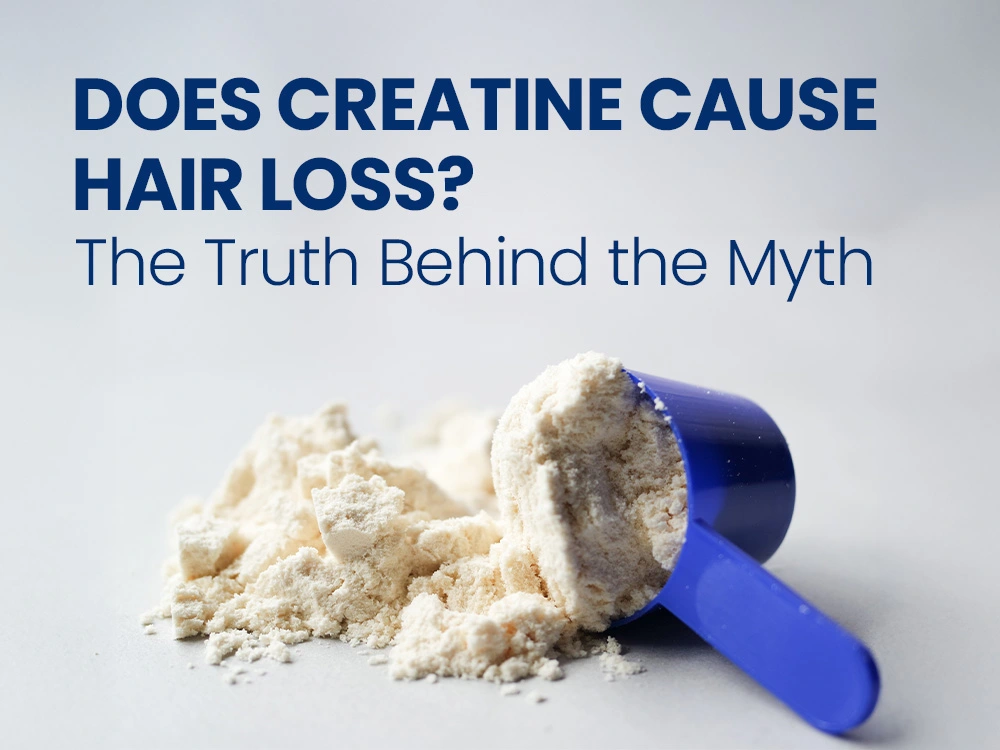
If you’ve spent any time in fitness forums or gym locker rooms, you’ve probably heard someone claim that creatine causes hair loss. This persistent rumor has made countless athletes hesitate before adding one of the most researched supplements to their routine. But does creatine actually cause hair loss, or is this fear based on misunderstood science? The truth is more nuanced than the headlines suggest, and understanding the real evidence can help you make an informed decision about your supplementation strategy.
Table of Contents
- Can Creatine Cause Hair Loss? The Origin of the Creatine and Hair Loss Myth
- What Modern Science Says About Creatine Safety
- Identifying the Real Causes of Thinning Hair
- Experiencing Hair Loss? Here Is the Permanent Solution
Can Creatine Cause Hair Loss? The Origin of the Creatine and Hair Loss Myth
The connection between creatine and thinning hair didn’t emerge from nowhere. It stems from a single study and a hormone called DHT that plays a central role in male pattern baldness.
Creatine and DHT: Understanding the Mechanism
DHT, or dihydrotestosterone, is a hormone derived from testosterone. In people genetically predisposed to hair loss, DHT binds to hair follicle receptors and gradually shrinks them, leading to thinner hair and eventual baldness. The theory goes that if creatine increases DHT levels, it could accelerate this process in susceptible individuals.
A 2009 study found a 56% increase in DHT levels in rugby players after 7 days of creatine loading. This single finding sparked widespread concern and has been cited repeatedly as evidence linking creatine to hair loss.
Where Did the Myth Come From?
Here’s the problem: that study never actually measured hair loss. It only measured hormone levels. No subsequent research has replicated these DHT findings, and the study had a small sample size with no long-term follow-up. The leap from “increased DHT” to “you’ll go bald” ignores several important factors, including individual genetic susceptibility and whether temporary hormone fluctuations actually impact hair follicles.
What Modern Science Says About Creatine Safety
The scientific consensus has evolved significantly since that 2009 study made headlines.
Reviewing Clinical Trials and Meta-Analyses
Recent research paints a reassuring picture. A 2025 study directly assessed hair follicle health and found that creatine does not contribute to hair loss. This represents a significant shift because researchers actually examined what happens to hair, not just hormone levels in blood samples.
Dr. Idris Mughal, notes that even if creatine increases DHT levels, it’s unlikely to cause further hair loss beyond what is expected otherwise. Your genetics determine your hair loss trajectory far more than any supplement.
Does the Type of Creatine Matter?
Creatine monohydrate remains the most studied form, and the safety data primarily applies to this version. Newer formulations like creatine HCL or buffered creatine lack the same depth of research. The actual side effects documented by Cleveland Clinic include water retention and weight gain: not hair loss.
Identifying the Real Causes of Thinning Hair
If creatine isn’t the culprit, what actually causes hair to thin?
Genetics, Stress, and Nutritional Deficiencies
Androgenetic alopecia, commonly called male or female pattern baldness, is the primary cause of hair loss and is largely determined by your genes. Other significant factors include:
- Chronic stress: Telogen effluvium can cause temporary but dramatic shedding
- Nutritional gaps: Iron, zinc, biotin, and protein deficiencies directly impact hair health
- Hormonal changes: Thyroid disorders and menopause affect hair growth cycles
- Certain medications: Blood thinners, antidepressants, and some acne treatments list hair loss as side effects
Anabolic Steroids vs. Creatine Supplementation
Creatine often gets unfairly lumped together with anabolic steroids, but they’re completely different substances. Anabolic steroids dramatically alter hormone levels and can absolutely accelerate hair loss in predisposed individuals. Creatine is a naturally occurring compound found in meat and fish that your body already produces. The confusion between these substances has contributed significantly to creatine’s undeserved reputation.

Ready to restore your hair?
Get in touch anytime — our experts are here 24/7 for a free online consultation
Experiencing Hair Loss? Here Is the Permanent Solution
Creatine remains one of the safest and most effective supplements available. If your hair is thinning, look at your family history, stress levels, and overall health before ditching a supplement that’s probably helping your fitness goals. And if genetics aren’t on your side, effective solutions exist that address the real problem rather than chasing myths.
If you’re noticing thinning hair, blaming your creatine supplement likely won’t solve the problem. The most effective approach starts with identifying the actual cause through consultation.
For those with genetic hair loss seeking lasting results, hair transplant procedures offer a permanent solution. Clinics like Estenove specialize in modern transplant techniques that deliver natural-looking results. Unlike temporary treatments that require ongoing maintenance, transplanted follicles continue growing for life. For those considering their options now, Estenove offers free hair restoration consultation to help create a personalized strategy.
Frequently Asked Questions
No. Modern scientific consensus confirms that creatine does not contribute to hair loss. In women, thinning is more likely caused by genetics, chronic stress, nutritional deficiencies, or hormonal changes like menopause.
No. According to the Cleveland Clinic, documented side effects of creatine include water retention and weight gain, but not hair loss. Your genetic predisposition plays a much larger role in your hair trajectory than a 5g daily supplement.
References
Mohammadyasin Lak, et al. (2025). Does creatine cause hair loss? A 12-week randomized controlled trial. Journal of the International Society of Sports Nutrition. https://pubmed.ncbi.nlm.nih.gov/40265319/
Cleveland Clinic. (2024, July 17). Does creatine cause hair loss? Health Essentials. https://health.clevelandclinic.org/does-creatine-cause-hair-loss/
Healthline. (n.d.). Creatine hair loss: What the research says. https://www.healthline.com/health/creatine-hair-loss
Medical Disclaimer: These are pharmaceutical treatments with distinct mechanisms and risk profiles. The medical information on this site is provided as an information resource only. Always consult a physician before starting or stopping any medication. Medically reviewed by the Estenove Medical Board. (February 2026)