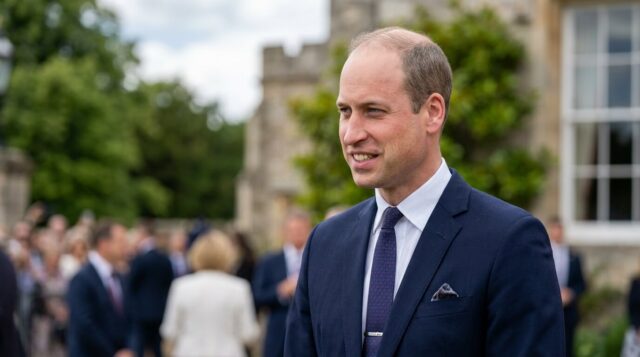

Few public figures have had their hairline scrutinized as closely as the Prince of Wales. From his thick-haired teenage years to his current clean-shaven look, Prince William’s hair loss has been tracked by tabloids, trichologists, and millions of curious onlookers alike. His timeline offers a remarkably public case study in male pattern baldness and how one of the world’s most visible men chose to handle it.
The Evolution of Prince William’s Hair Loss Journey
Early Signs of Thinning in the Early 2000s
By the time William entered his early twenties, the first signs were already visible. Photographs from 2002 to 2007 show a gradual recession at the temples and a thinning crown, consistent with Norwood Scale Stage II-III progression. Experts have noted that William’s hair loss aligns with a typical timeline for male pattern baldness, which often begins between ages 18 and 25 when dihydrotestosterone (DHT) starts miniaturizing genetically sensitive follicles.
By his 2011 wedding to Catherine Middleton, the thinning was unmistakable. Side-by-side comparisons with his appearance just five years earlier showed significant loss across the vertex and frontal scalp. The biological mechanism is straightforward: DHT binds to androgen receptors in the hair follicle, shortening the anagen (growth) phase until the follicle produces only fine vellus hairs before ceasing production entirely.
Transitioning to a Fully Bald Aesthetic
Around 2017-2018, William began buzzing his hair to a uniform short length, a move widely praised by style commentators. By 2023, he had essentially embraced a fully shaved look. The transition was gradual rather than abrupt, spanning roughly five years from a close crop to near-complete removal. This approach mirrors what dermatologists often recommend: rather than clinging to thinning coverage, a shorter cut creates a cleaner, more intentional appearance. In 2021, The Sun crowned William the world’s sexiest bald man based on a Google search analysis that found 17.6 million mentions pairing his name with terms like “sexy,” “hot,” and “attractive.”
Royal Family Hair Loss and Genetic Factors
The Windsor Legacy of Male Pattern Baldness
Androgenetic alopecia runs strongly through the Windsor line. Prince Philip experienced significant hair loss by his thirties. Prince Charles showed visible thinning throughout his forties and fifties. The genetic component of male pattern baldness involves multiple genes, some inherited from the maternal side via the X chromosome and others from the paternal line.
William’s maternal grandfather, John Spencer, also experienced hair loss, creating a genetic double contribution. The inheritance pattern is polygenic, meaning no single gene determines the outcome. With both parental lines contributing susceptibility, William’s progression was, in genetic terms, highly probable. His brother Harry has followed a similar, albeit slower, trajectory with noticeable thinning at the crown beginning in his late twenties.
Addressing the Prince William Hair Transplant Rumors
Expert Analysis on Why He Chose Not to Undergo Surgery
Speculation about whether William has had or will pursue a hair transplant has persisted for over a decade. The short answer: there is no credible evidence he has undergone any surgical restoration. Trichologists note that modern FUE (Follicular Unit Extraction) procedures can achieve natural-looking results with 90-95% graft survival rates, and the global hair loss treatment market was valued at USD 3.14 billion in 2026, projected to reach USD 4.45 billion by 2031.
So why hasn’t the future king pursued treatment? The most likely explanation is a combination of personal preference and public optics. A hair transplant requires 12-18 months for full results, with visible redness and scabbing in the first 2-3 weeks post-procedure. For someone photographed almost daily, that recovery window presents a practical challenge. Clinics like Estenove in Istanbul regularly treat high-profile patients who can schedule discreet recovery periods, but William’s schedule allows little room for that kind of privacy.
Influence on Male Pattern Baldness Perception and Celebrities
Embracing the Look: A Shift in Royal Grooming Standards
William’s decision to own his baldness rather than conceal it has had measurable cultural impact. When he sported a beard in the summer of 2024, requests for beard transplants tripled, demonstrating his influence on male grooming trends. The message is clear: a bald head paired with a well-maintained beard reads as confident and modern.
His visibility has helped shift perceptions among men experiencing hair loss. Rather than viewing baldness as something to fix, many now see it as a legitimate style choice. Celebrities like Jason Statham, Dwayne Johnson, and Stanley Tucci have reinforced this, but a future king normalizing the look carries unique cultural weight. The stigma around male pattern baldness among public figures has measurably decreased over the past decade, and William deserves partial credit for that shift.
F.A.Q
Yes. Male pattern baldness runs through both the Spencer and Windsor families. The condition is polygenic, meaning multiple inherited genes contribute, making William’s hair loss largely predetermined.
He has androgenetic alopecia, the most common form of hair loss in men. It is driven by DHT sensitivity in hair follicles and follows a predictable pattern of frontal recession and vertex thinning.
No credible evidence suggests he has undergone a hair transplant. His gradual transition to a shaved head indicates he chose to embrace baldness rather than pursue surgical restoration.
Visible thinning began in his early twenties, around 2002-2005. By his late twenties, the loss was pronounced, and by his mid-thirties, he had adopted a close-cropped style that eventually became a fully shaved look.