
Turkey has quietly become the world’s undisputed capital for hair restoration surgery, and the numbers back it up: over one million hair transplant procedures were performed in Turkey in 2024 alone. For anyone researching the best Istanbul hair transplant clinics, the sheer volume of options can feel paralyzing. This city processes more hair restoration patients per day than most countries handle in a month, which means the gap between an excellent clinic and a mediocre one can be enormous. The stakes are real: this is a surgical procedure on your scalp, performed once, with results you’ll carry for decades. Choosing well matters more than choosing cheaply. What follows is a direct, evidence-based comparison of five leading clinics, the techniques they specialize in, and the specific criteria you should use to separate marketing hype from genuine surgical excellence.
Why Istanbul is the Global Hub for Hair Restoration
Istanbul didn’t become the epicenter of hair transplantation by accident. A combination of government investment in medical tourism infrastructure, a massive pool of trained surgeons, and aggressive pricing created a flywheel effect: more patients attracted more clinics, which attracted more talent, which drove down costs, which attracted even more patients. The city now performs over 200 hair transplant procedures daily, concentrated primarily in the Şişli and Fatih districts, where entire blocks are devoted to medical tourism.
The Turkish government has actively supported this industry through healthcare free zones and favorable regulations for international patients. Hospitals in Istanbul routinely hold JCI (Joint Commission International) accreditation, the gold standard for international healthcare facilities. This institutional support means clinics operate within a framework of accountability that many patients don’t expect from a “medical tourism” destination.
Advanced Surgical Techniques and Technology
Istanbul’s top clinics have been early adopters of the two dominant techniques in modern hair restoration: FUE (Follicular Unit Extraction) and DHI (Direct Hair Implantation). The best facilities use sapphire-tipped blades for micro-channel creation during FUE, which produce incisions as small as 1.0mm to 1.3mm. These smaller channels reduce tissue trauma, minimize scarring, and allow for denser packing of grafts per square centimeter.
DHI, which uses a Choi implanter pen, takes precision a step further. The pen simultaneously creates the recipient channel and implants the follicle in a single motion, reducing the time grafts spend outside the body. This matters because graft survival rates drop measurably after 4-6 hours of exposure. Leading Istanbul clinics report graft survival rates of 90-95% with DHI, compared to the 85-90% range typical of standard FUE at less specialized facilities.
Some clinics have also integrated platelet-rich plasma (PRP) therapy and stem cell treatments into their protocols. These adjunct therapies are administered during and after the procedure to accelerate healing and improve follicle viability. Estenove, for instance, offers stem cell hair transplant options alongside traditional FUE and DHI, reflecting the broader trend of combining biological therapies with surgical technique.
Cost-Effectiveness and All-Inclusive Medical Tourism
The financial argument for Istanbul is straightforward and compelling. The average hair transplant in Istanbul costs around £1,464, €1,745, or $1,840, a fraction of the $10,000-$15,000 price tag common in the United States or United Kingdom. Most reputable clinics bundle this into all-inclusive packages covering airport transfers, hotel accommodation (typically 2-3 nights near the clinic), pre-operative blood tests, the procedure itself, post-operative medications, and follow-up consultations.
This pricing isn’t a reflection of inferior quality. Lower labor costs, favorable exchange rates, and the sheer volume of procedures performed allow clinics to maintain high standards while charging less. That said, a word of caution: the cheapest option is rarely the best one. Clinics advertising procedures under $1,000 are often cutting corners on staffing, graft handling, or surgeon involvement.
Top 5 Istanbul Hair Transplant Clinics Compared
Comparing Istanbul’s top hair transplant clinics requires looking beyond glossy websites. The five facilities that consistently rank highest based on verified patient outcomes, surgeon credentials, and international accreditation are:
| Clinic | Primary Technique | Graft Capacity | Notable Feature |
|---|---|---|---|
| Estenove | DHI, FUE, Stem Cell | Up to 5,500 grafts | Stem cell integration with transplant |
| Vera Clinic | Sapphire FUE, DHI | Up to 5,000 grafts | Oxycure therapy post-op |
| HLC Clinic | FUE (manual punch) | Up to 4,000 grafts | Surgeon-only extraction |
| ASMED | Micro FUE | Up to 6,000 grafts | High-volume single sessions |
| Cosmedica | Sapphire FUE, DHI | Up to 5,500 grafts | Custom hairline design focus |
Each clinic has a distinct philosophy. Some prioritize maximum graft count in a single session, while others focus on conservative extraction to preserve donor area density for potential future procedures. The right choice depends on your specific pattern of hair loss, your age, and your long-term expectations.
Comparison of FUE vs DHI Specializations
The FUE vs. DHI debate isn’t about one technique being universally superior. It’s about matching the technique to the patient’s needs.
FUE works best for patients requiring large-volume sessions (4,000+ grafts) because it allows a faster extraction and implantation workflow. The sapphire variant, used by most top Istanbul clinics, creates V-shaped incisions that heal faster than steel-blade alternatives. Recovery time is typically 7-10 days before the redness subsides enough for social presentability.
DHI excels in precision work: hairline design, eyebrow transplants, and adding density to areas with existing hair where angle and direction control are critical. The Choi pen allows implantation at exact angles of 40-45 degrees, mimicking natural hair growth patterns. The trade-off is speed; DHI sessions typically handle 2,000-3,500 grafts compared to FUE’s higher ceiling.
Patients with Norwood Scale stages 3-4 often benefit from a combined approach: DHI for the hairline and frontal zone, FUE for the crown and mid-scalp. Several clinics on this list offer hybrid sessions that use both techniques in a single day.
Surgeon Expertise and Patient Success Rates
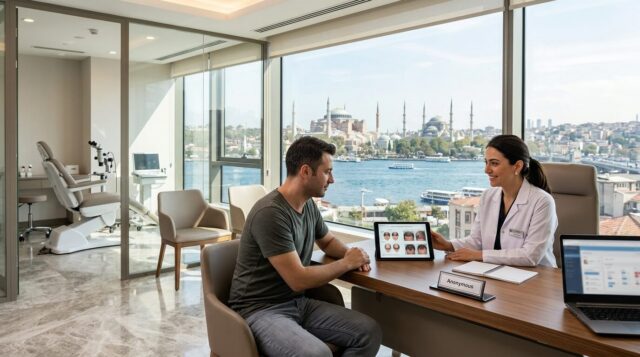
The single most important variable in your outcome is who actually performs the extraction and implantation. This is where due diligence pays off. Ask every clinic directly: does the named surgeon perform the extraction, or does a technician handle it?
In Turkey, “ghost surgery” remains an industry-specific risk where technicians perform the bulk of the procedure while the surgeon’s name appears on the paperwork. Reputable clinics are transparent about their surgical team structure. HLC Clinic, for example, has built its reputation specifically on surgeon-only extraction, a practice that limits their daily graft capacity but ensures consistency.
Patient success rates should be evaluated through before-and-after galleries showing results at 12 months post-procedure, not the 6-month mark where growth is still incomplete. Expect to see 80-90% of transplanted hairs growing by month 12, with full maturation and thickening continuing through month 18. A reliable way to look beyond just the price is to request video testimonials and contact details for previous patients willing to share their experience.
Key Factors for Selecting the Right Clinic
Price and technique matter, but they’re not the whole story. The factors below separate clinics that deliver consistent, long-term results from those that produce impressive-looking day-one photos but disappointing 12-month outcomes.
Accreditations and International Standards
Start with verification. Any clinic worth considering should hold at least one of the following:
- JCI accreditation (the international gold standard for hospital quality)
- ISO 9001 certification for quality management systems
- Turkish Ministry of Health licensing for international patient services
- Membership in ISHRS (International Society of Hair Restoration Surgery)
These aren’t just bureaucratic checkboxes. JCI accreditation, for instance, requires documented infection control protocols, equipment sterilization standards (autoclaving at 134°C for 18 minutes), and staff-to-patient ratios. Clinics operating out of converted hotel rooms or unlicensed facilities lack these safeguards entirely.
Ask for the surgeon’s individual credentials as well. Board certification in dermatology or plastic surgery, plus specific fellowship training in hair restoration, is the baseline. Years of experience matter less than volume of procedures: a surgeon who has performed 3,000+ transplants will handle unexpected complications (thin donor areas, scarring from previous procedures) with far more confidence than one with 300.
Post-Operative Care and Long-Term Results
The first 14 days after surgery determine graft survival. Top clinics provide detailed aftercare kits that include saline spray solutions, specialized shampoos (typically starting day 3), antibiotic ointments, and anti-swelling medication such as dexamethasone. You should receive a written protocol specifying sleeping position (elevated at 45 degrees for 5-7 nights), activity restrictions (no heavy exercise for 4 weeks), and washing techniques (gentle patting, no rubbing until day 10).
Expect a detailed results timeline from your clinic:
- Days 1-10: Scabbing and redness in recipient area
- Weeks 2-4: Transplanted hairs shed (this is normal and expected)
- Months 3-4: New growth begins as fine, thin hairs
- Months 6-8: Visible density improvement; hairs thicken
- Months 12-18: Full result with mature hair texture
Track your own progress by taking monthly photos of your hairline and crown under consistent lighting, from the same angle. This objective record helps you and your surgeon evaluate growth patterns during follow-up consultations, which reputable clinics offer via video call for international patients at 3, 6, and 12 months post-procedure.
Planning Your Procedure and Travel Logistics
Most Istanbul clinics are concentrated in the Şişli district, a 30-40 minute drive from Istanbul Airport (IST). The typical medical tourism itinerary spans 3-4 days: arrival and consultation on day one, the procedure on day two (sessions run 6-10 hours depending on graft count), a follow-up wash and inspection on day three, and departure on day four.
Book your consultation at least 6-8 weeks before your preferred procedure date. This gives you time to complete pre-operative blood work (CBC, coagulation panel, hepatitis screening) locally and send results to your clinic for review. Stop taking blood thinners, including aspirin and fish oil supplements, at least 10 days before surgery. If you take finasteride or minoxidil, discuss continuation protocols with your surgeon, as these medications can affect both donor area quality and post-transplant growth.
For flights, choose arrivals that land before noon so you can attend a same-day consultation. Most clinic packages include a dedicated patient coordinator who manages your transfer schedule, hotel check-in, and appointment timing. Confirm whether your package includes a PRP session, as some clinics charge this separately despite advertising “all-inclusive” pricing.
One practical tip that many patients overlook: bring a button-up shirt for the day of surgery. You won’t want to pull anything over your head for at least a week after the procedure. Pack a travel pillow for the flight home to avoid pressing the recipient area against the headrest.
The right clinic, chosen carefully and vetted thoroughly, can deliver results that last a lifetime. The wrong one can leave you with depleted donor areas and limited options for correction. Invest your time in research now so you can invest your confidence in the mirror later. If you’re comparing Istanbul hair transplant clinics seriously, start by requesting detailed surgical plans from at least three facilities, and don’t commit until you’ve spoken directly with the surgeon who will hold the instrument.