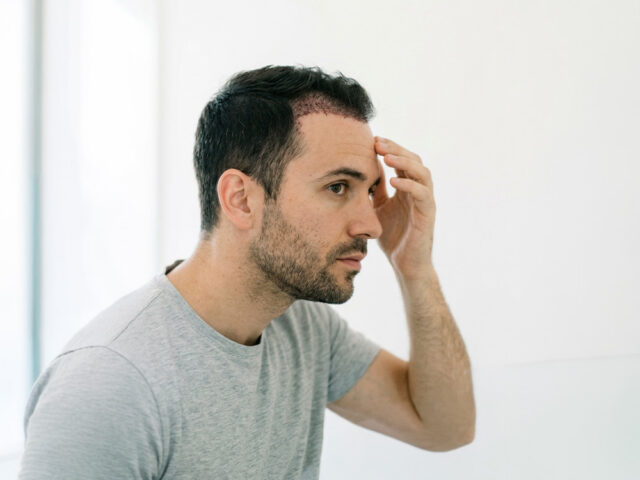

The first seven days after a hair transplant are the most critical period in the entire recovery timeline. Every decision you make during this window, from how you sleep to how you touch your scalp, directly affects whether those newly placed grafts take root or fail. Most patients feel a mix of excitement and anxiety during this stretch, and that is completely normal. The grafts are fragile, the scalp looks unfamiliar, and the internet is full of contradictory advice.
This day-by-day breakdown of your first week after a hair transplant gives you a clear, sequential roadmap. You will know exactly what to expect each day: what is normal, what is not, and what specific actions to take. The biological reality is that transplanted follicular units go through a cascade of healing responses during these initial days, and your job is simple: protect the grafts and let that process unfold without interference. Patients who follow structured post-operative protocols consistently see better graft survival rates and fewer complications. Whether you had an FUE or DHI procedure, the first-week fundamentals are nearly identical. The differences in technique matter at the operating table; the aftercare principles are universal.
Understanding the timeline also helps manage expectations. You will not see new hair growth this week. What you will see is swelling, redness, scabbing, and possibly some shedding of transplanted shafts. All of this is expected. The goal of week one is not cosmetic improvement: it is biological anchoring. By day seven, the grafts should be secure enough to withstand gentle washing, and the most vulnerable phase will be behind you.
Immediate Post-Op and Day 1: Protecting the Grafts
The hours immediately following your procedure set the tone for everything that comes next. When you leave the clinic, your scalp will be covered in thousands of tiny micro-channels where grafts have been placed. Each channel holds a follicular unit that is not yet anchored by new blood supply. The grafts are essentially sitting in place, held by the natural clotting process and the tight fit of the incision sites. Any physical contact, pressure, or trauma to the recipient area during this period risks dislodging them permanently.
Your clinic will typically apply a bandage to the donor area (the back of your head), but the recipient zone is left open to air. This is intentional: covering the transplanted area with a bandage could press grafts out of position. You will likely leave the clinic with a loose headband around your forehead to catch any fluid that drains downward from the anesthetic solution injected during surgery.
Essential Care for the First 24 Hours
The first 24 hours require near-total restraint. Do not touch, scratch, rub, or pick at the recipient area for any reason. Your hands should not go near the transplanted zone. If you feel itching or tingling, that is the anesthetic wearing off and the initial inflammatory response beginning: both are signs that healing has started.
Keep your head upright as much as possible. Bending forward increases blood pressure to the scalp and can cause bleeding at the graft sites. If you need to pick something up, bend at the knees. Avoid any physical exertion, including walking up stairs quickly. Your heart rate should stay low and steady.
Hydration matters more than most patients realize. Drink at least two to three liters of water on day one. The saline solution used during surgery causes fluid retention, and staying hydrated helps your body process and eliminate that excess fluid faster, which directly reduces swelling severity in the days ahead.
Managing Initial Discomfort and Sleeping Positions
Most patients describe day-one discomfort as mild to moderate: more of a tightness or sunburn sensation than sharp pain. Your surgeon will prescribe pain medication, typically a combination of an analgesic and an anti-inflammatory. Take these on schedule, not reactively. Staying ahead of the pain cycle prevents the kind of restless movement during sleep that puts grafts at risk.
Sleep is where many patients make their first mistake. You must sleep with your head elevated at a 45-degree angle for the first few nights to minimize swelling and protect the grafts. A travel neck pillow combined with two to three stacked pillows works well. Sleep on your back only. Side sleeping presses the recipient or donor area into the pillow, and stomach sleeping is completely off limits. Some patients find sleeping in a recliner chair easier for the first two nights.
Days 2 to 4: Managing Hair Transplant Swelling and Scabbing
Days two through four are when the side effects of hair transplant become most apparent. Swelling is the dominant concern during this window, and it catches many patients off guard because it often appears not on the scalp itself but on the forehead and around the eyes. This happens because the saline and anesthetic fluids injected during the procedure migrate downward due to gravity. The swelling is temporary and cosmetic only: it does not affect graft survival.
Redness across the recipient area intensifies during this period. The scalp may look raw and inflamed. Small amounts of dried blood around the graft sites are normal. You may also notice tiny crusts beginning to form at the base of each transplanted hair. This is the start of scabbing, and it is a healthy sign that the micro-channels are closing and the grafts are stabilizing.
Addressing Peak Swelling on Day 3
Hair transplant swelling on day 3 typically reaches its peak intensity. Some patients experience puffiness that extends from the forehead down to the eyelids and even the bridge of the nose. This can look alarming, but it typically resolves within 5 to 7 days of the procedure. Applying a cold compress to the forehead (never directly on the grafts) for 15 to 20 minutes at a time can help. Keep the compress on the forehead only, above the hairline, pressing gently.
Continuing to sleep elevated remains critical during this phase. If you dropped to a flatter sleeping position on night two, the swelling on day three will be noticeably worse. Some clinics prescribe a short course of oral steroids to manage severe swelling. If your surgeon provided these, follow the dosing schedule exactly.
Patients can typically return to work within 2 to 3 days after a hair transplant, particularly if they work from home or in a non-physical role. However, the visible swelling and redness on days two through four may make you self-conscious in public. Plan accordingly: many patients schedule their procedure on a Thursday or Friday to give themselves a full week before returning to the office.
The Start of the Scabbing Process
By day three or four, small scabs form around each transplanted graft. These scabs are made of dried blood, plasma, and lymphatic fluid. They look like tiny dark dots scattered across the recipient area. The scabs serve a protective function: they seal the micro-channels and help anchor the grafts while new tissue forms beneath.
Do not pick at, scratch, or attempt to remove these scabs. This is the single most important rule of the scabbing phase. Premature scab removal can pull a graft out of its channel entirely. The scabs will soften and fall off naturally during the washing process that begins on day five or later, depending on your clinic’s protocol.
You may notice that some transplanted hair shafts are visible poking through the scabs. Others may appear to have fallen out already. Both scenarios are normal. The hair shaft itself is not the valuable part: the follicular unit beneath the surface is what matters. Even if a shaft sheds, the root structure typically remains intact and will produce new growth in the months ahead.
Days 5 to 7: Transitioning to Gentle Washing
The final stretch of your first week marks a turning point. By day five, the grafts have formed initial connections with the surrounding tissue. They are not fully anchored yet, but they are significantly more stable than they were on day one. The risk of graft dislodgement drops substantially after the 72-hour mark, and by day five, normal gentle contact with the scalp becomes possible.
This is the phase where you transition from pure protection mode to active care. Your scalp needs to be cleaned to prevent infection, remove crusting, and promote healthy healing conditions. The donor area, which may have been bandaged until now, also needs attention. Many patients feel a psychological lift during this period as they begin taking a more active role in their recovery.
Safe Hair Washing Techniques for the First Week
Most surgeons recommend the first gentle wash between day three and day five, with specific instructions varying by clinic. At Estenove, patients receive a detailed washing protocol tailored to their procedure type. The general approach follows a consistent pattern regardless of where you had your surgery.
Fill a cup with lukewarm water (not hot, not cold) and add a small amount of the medicated shampoo provided by your clinic. Do not pour water directly onto the grafts from a showerhead: the water pressure is too strong. Instead, use the cup to gently pour water over the scalp, letting it flow over the grafts without force.
Apply the shampoo with a patting motion using your fingertips. No rubbing, no circular motions, no pressing. Pat the shampoo across the recipient area, let it sit for one to two minutes, then rinse by pouring cupfuls of lukewarm water. Repeat daily from this point forward. Each wash will soften and remove more scabs. By day seven, most of the scabbing should be gone or nearly gone.
Monitoring Graft Security and Itching
Itching becomes a significant issue for most patients between days five and seven. The scalp is healing, new tissue is forming, and nerve endings are reactivating. This itching can be intense. Do not scratch. If the urge becomes overwhelming, press a clean, damp cloth gently against the area. Some clinics recommend a light application of aloe vera gel or a prescribed topical spray to soothe the itch.
By day seven, you can begin to assess your scalp more carefully. The redness will still be present but should be fading. Swelling should be largely resolved by this point. The scabs should be softening or gone. If you notice any areas of unusual warmth, increasing redness, pus, or a foul smell, contact your surgeon immediately: these could be signs of infection, which is rare but requires prompt treatment.
Take a photo of your scalp on day seven under consistent lighting. This becomes your baseline image for tracking progress over the coming months. Photograph the hairline, the crown (if grafts were placed there), and the donor area from the same angles each time.
Summary of Week 1 Hair Transplant Recovery Milestones
Your first week after a hair transplant follows a predictable arc: protect, endure, and begin to clean. Day one is about total graft protection and managing the immediate aftermath of surgery. Days two through four bring peak swelling, the onset of scabbing, and the most visually dramatic phase of recovery. Days five through seven shift the focus to gentle washing, scab removal, and itch management.
The key milestones to track during your day-by-day hair transplant healing process are: swelling onset (day two), swelling peak (day three), first wash (day three to five per your surgeon’s instructions), scab softening (days five to seven), and swelling resolution (days five to seven). If you hit each of these markers on roughly the expected timeline, your recovery is on track.
Remember that this first week is temporary and self-limiting. The discomfort fades, the swelling resolves, and the redness diminishes. The real results of your transplant will not be visible for three to six months, with full density typically achieved between twelve and eighteen months. Your only job right now is to protect the investment you have made in your scalp and follow your surgeon’s instructions precisely.