
Asking yourself “am I a good candidate for a hair transplant?” is the right starting point, and it’s a more complex question than most people realize. Hair restoration surgery has evolved significantly over the past decade, with success rates generally falling between 75% and 95% depending on technique, surgeon skill, and patient selection. But that wide range tells you something important: not every patient walks away with the same outcome.
The difference between a life-changing result and a disappointing one often comes down to whether you were truly a strong candidate in the first place. Your age, the stability of your hair loss, your donor supply, your health profile, and your expectations all factor into the equation. Understanding these variables before you commit to a procedure protects both your investment and your results. This guide breaks down each factor so you can make an informed decision about whether hair transplant surgery is right for you.
Understanding Hair Transplant Eligibility Criteria
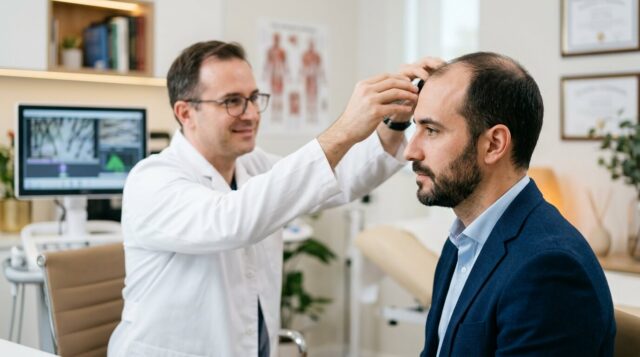
Hair transplant eligibility isn’t a single yes-or-no checkbox. It’s a layered assessment that considers the quality of what you have to give (donor hair), the extent of what you’ve lost, and whether your body can support the healing process. Surgeons evaluate candidacy through in-person or virtual consultations that include scalp analysis, medical history review, and sometimes blood work. The goal is to determine whether the procedure can deliver a result that looks natural now and holds up over time.
A common misconception is that anyone with hair loss qualifies for transplant surgery. The reality is that some patients are better served by medical treatments like finasteride or minoxidil, platelet-rich plasma therapy, or a combination approach. A responsible clinic will tell you this upfront rather than pushing you toward surgery.
The Importance of Donor Hair Density and Quality
The donor area, typically the back and sides of the scalp, is the engine of any transplant. If this area lacks sufficient density or the hair shafts are thin and fine, even the most skilled surgeon will struggle to produce a full-looking result. A good transplant density typically ranges between 30 to 40 follicular units per square centimeter in the recipient area, and achieving that requires a robust donor supply.
Donor hair quality matters as much as quantity. Thick, coarse hair provides significantly more coverage per graft than fine hair. Curly or wavy hair also creates an optical illusion of density, which is why patients with these hair types often achieve results that appear fuller with fewer grafts. During a consultation, surgeons use a densitometer to measure follicular unit density in the donor zone, typically aiming for at least 60-80 FU/cm² in the donor area to ensure enough grafts can be harvested without visible thinning.
Body hair from the chest or beard can sometimes supplement scalp donor hair, but these grafts behave differently: they grow at different rates, have different textures, and their survival rates are generally lower. They’re a backup plan, not a primary source.
Classification of Hair Loss Patterns and Severity
Hair loss classification systems give surgeons a shared language for assessing severity. The Norwood-Hamilton scale (for men) ranges from Type I (minimal recession) to Type VII (extensive loss across the crown and frontal regions). The Ludwig scale classifies female pattern hair loss into three grades of diffuse thinning across the top of the scalp.
Patients in the early stages of loss (Norwood II-III or Ludwig I) often get excellent results because they need fewer grafts and have ample donor supply. Those at Norwood V-VII face a mathematical challenge: the area that needs coverage is large, but the donor supply is finite. A surgeon might be able to transplant 4,000-5,000 grafts in a single session, but covering an entire crown and frontal zone in advanced cases could theoretically require 8,000 or more. This is where strategic planning becomes critical, prioritizing the hairline and frontal third to frame the face, with the understanding that full density everywhere may not be achievable.
Key Factors for Hair Transplant Candidacy
Beyond donor supply and loss pattern, several personal factors determine whether you’re a strong candidate for transplant surgery. Two of the most significant are your age and your overall health.
Optimal Hair Transplant Age Requirements
Hair transplant age requirements exist for good reason. Most reputable surgeons won’t operate on patients under 25, and many prefer to wait until 28-30. The logic is straightforward: hair loss in your early twenties is often still progressing rapidly. Transplanting hair into a receding hairline at 22 means you could lose the native hair behind and around those grafts within a few years, creating an unnatural island of transplanted hair surrounded by thinning.
Waiting allows your loss pattern to stabilize, giving the surgeon a clearer picture of your final hair loss trajectory. This makes it possible to design a hairline and distribution plan that will still look appropriate at 40, 50, and beyond. Younger patients who are eager to act should consider starting with medical therapy (finasteride, minoxidil, or both) to slow progression while they wait for the right surgical window.
On the other end of the spectrum, there’s no strict upper age limit. Patients in their 60s and 70s can be excellent candidates as long as their donor area is intact and they’re in good health. The key question isn’t how old you are but how stable your loss has become.
Impact of Overall Health and Medical History
Hair transplant surgery, whether FUE or DHI, is performed under local anesthesia and is minimally invasive compared to most surgical procedures. That said, certain health conditions affect candidacy. Uncontrolled diabetes impairs wound healing and increases infection risk. Blood clotting disorders or the use of blood-thinning medications can cause excessive bleeding during graft extraction and implantation. Autoimmune conditions like alopecia areata present a unique challenge because the immune system may attack transplanted follicles just as it attacked the originals.
Your surgeon will want a complete medical history, including current medications, supplements, and any chronic conditions. Smoking is a significant concern: nicotine constricts blood vessels and reduces oxygen delivery to the scalp, which directly impacts graft survival. Most clinics require patients to stop smoking at least two weeks before and after surgery. Patients with well-managed chronic conditions can often proceed safely, but transparency with your medical team is essential.
Who Qualifies for Hair Transplant Procedures
The short answer: anyone with sufficient donor hair, stable (or stabilized) hair loss, reasonable health, and realistic expectations. But the details vary depending on gender, hair loss cause, and individual anatomy.
Gender-Specific Considerations for Men and Women
Male pattern baldness (androgenetic alopecia) is the most common reason men seek transplants, and it follows predictable patterns that make surgical planning relatively straightforward. Men with Norwood III-V classifications and good donor density are often ideal candidates.
Female candidacy is more nuanced. Women now represent 15.3% of hair transplant patients, up from 12.7% in 2021, reflecting growing awareness that transplants aren’t exclusively a male procedure. However, women more commonly experience diffuse thinning rather than the focal recession men develop. Diffuse thinning can affect the donor area too, which limits the available supply. Women with traction alopecia from tight hairstyles, scarring from burns or surgery, or localized thinning at the temples tend to be stronger candidates than those with widespread diffuse loss.
Hormonal factors also play a role. Women should have thyroid function, iron levels, and hormonal panels checked before being considered for surgery. Hair loss driven by an underlying medical condition needs to be treated at the source first.
Setting Realistic Expectations for Results
One of the most respected voices in hair restoration put it plainly: the most important factor in determining candidacy is “whether patients are realistic about what can be achieved short-term and long-term as they continue to age”. A transplant redistributes your existing hair. It doesn’t create new follicles. Understanding this distinction is fundamental.
Results typically follow a predictable timeline. Transplanted hairs shed within the first 2-4 weeks (this is normal and expected). New growth begins around months 3-4, with noticeable density appearing by month 6. Final results take 12-18 months to fully mature. Patients who expect a full head of hair two months after surgery will be frustrated, while those who understand the biological timeline tend to be highly satisfied.
Predicting Long-Term Hair Loss Progression
A transplant addresses your current hair loss, but it doesn’t stop future loss. If you’re 30 and at Norwood III, you may progress to Norwood V by 50. A skilled surgeon plans for this by designing a hairline that will age gracefully and by recommending ongoing medical therapy to slow native hair loss around the transplanted grafts.
Clinics like Estenove, based in Istanbul’s medical district near the international airport, factor long-term progression into their surgical plans during initial consultations. This forward-thinking approach prevents the “pluggy” or unnatural look that can result from aggressive early transplants that don’t account for future loss. The best candidates are those who commit to a long-term hair maintenance strategy, not just a one-time procedure.
F.A.Q
Active alopecia areata, insufficient donor hair density, uncontrolled diabetes, active scalp infections, and certain blood clotting disorders can disqualify candidates. Patients with trichotillomania (compulsive hair pulling) or body dysmorphic disorder may also be advised against surgery until those conditions are managed.
Absolutely. The donor area is a finite resource. If density in the occipital region falls below 40 FU/cm², the surgeon may not be able to extract enough grafts without creating visible thinning in the donor zone. A densitometer reading during consultation provides this critical measurement.
Yes. Women with localized hair loss, traction alopecia, or high hairlines can be excellent candidates. Those with diffuse thinning across the entire scalp, including the donor area, face more limitations. A thorough hormonal and nutritional workup is essential before proceeding.
Most surgeons recommend waiting until at least age 25, with many preferring 28-30. Younger patients typically have unstable hair loss patterns that make long-term surgical planning unreliable. Medical therapy can bridge the gap until the loss pattern stabilizes.
A strong candidate has adequate donor density (60+ FU/cm² in the donor zone), a stable or stabilized hair loss pattern, good general health, and realistic expectations about what surgery can achieve. They understand that results take 12-18 months to mature and that ongoing maintenance therapy may be needed to protect native hair.