You made it through the hardest part: the first ten days of restricted movement, careful sleeping positions, and constant worry about disturbing your grafts. Now you’re staring in the mirror, trying to figure out whether what you see is normal healing or a sign of trouble. The two-week mark after a hair transplant is a critical transition point where the scalp shifts from acute recovery into a longer regeneration phase. Most of what you’re experiencing right now, from shedding hairs to lingering redness, falls squarely within the expected range. But knowing exactly what’s normal versus what warrants a call to your surgeon makes all the difference in your peace of mind. This guide breaks down every symptom, sensation, and visual change you should anticipate during hair transplant week 2 recovery, backed by clinical data, so you can stop guessing and start healing with confidence.
The Transition Phase: What to Expect 2 Weeks After Hair Transplant
After hair transplant week 1, the second week represents a turning point. Your scalp is no longer in its most vulnerable state, but it hasn’t fully stabilized either. The micro-channels created during graft placement, typically 0.6mm to 1.0mm in diameter depending on whether you had FUE or DHI, have largely closed by now. Blood supply to the transplanted follicles is being re-established through a process called neovascularization, where tiny new capillaries form around each graft.
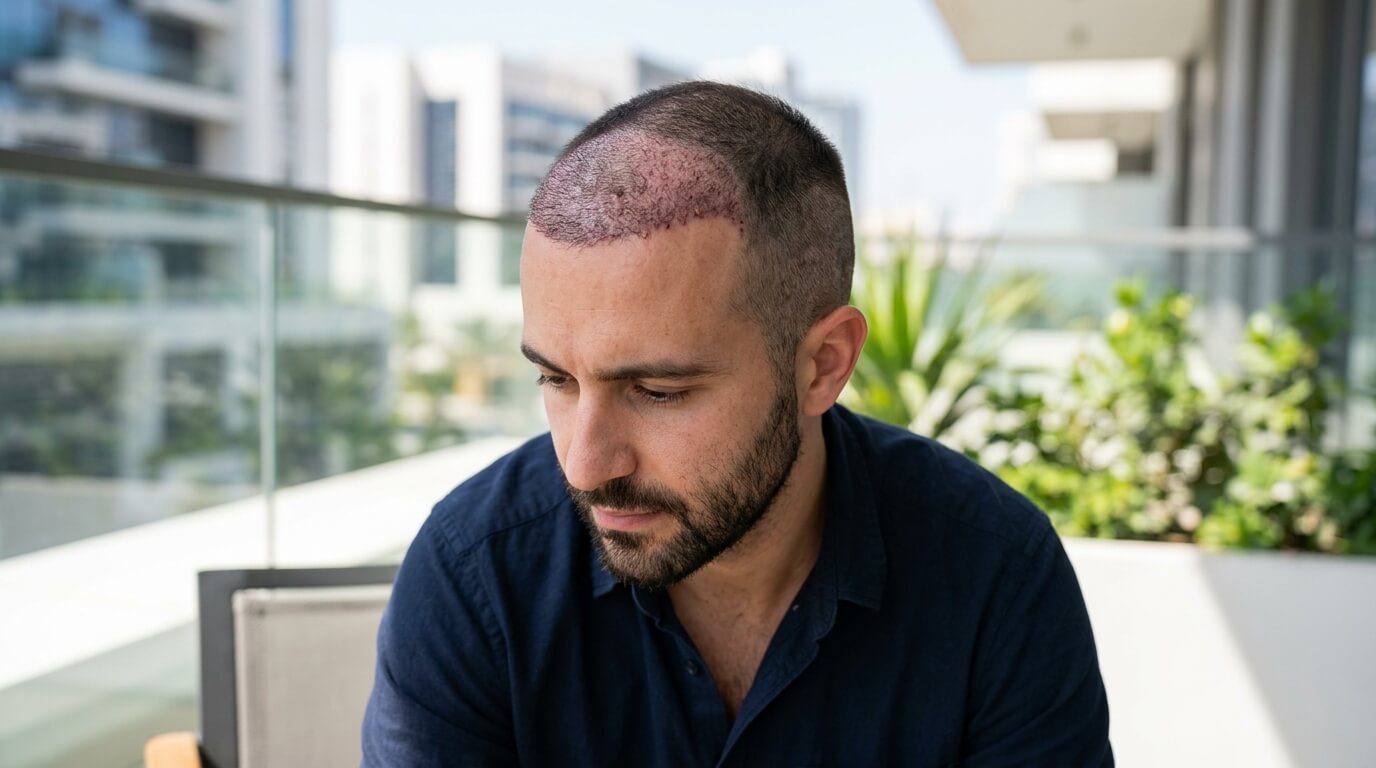
Visually, your scalp may look patchy and uneven. Some areas appear pink, others pale, and the transplanted hairs themselves might look thin and wispy. This is entirely expected. The grafts are anchored beneath the skin, even if the visible hair shafts look fragile or begin to fall. Your donor area, whether it’s the back or sides of your head, should also be healing well by now, with any small puncture marks fading into barely visible dots.
Scabbing Falling Off and Scalp Healing Progress
By day 10 to 14, most scabs should be gone or nearly gone. Scabbing after a hair transplant serves a protective purpose: each tiny crust forms over the insertion site, shielding the graft while the skin knits together. If you’ve been following your surgeon’s washing protocol, gently soaking the scalp with lukewarm water and applying a prescribed solution, the scabs will have softened and detached naturally.
Some patients still have stubborn scabs at the two-week mark, particularly in areas where grafts were packed densely. This isn’t alarming. Resist the urge to pick or scratch at them, as forcibly removing a scab risks pulling the graft out with it. Instead, apply a gentle moisturizer or the saline solution your clinic recommended, let it sit for 15 to 20 minutes, and then use light circular fingertip motions during your wash. If scabs persist beyond day 18, contact your surgeon for specific guidance.
Managing Residual Redness and Itching
Redness at the two-week point is common, especially for patients with lighter skin tones where contrast is more visible. The recipient area may carry a pinkish hue that can last anywhere from two to six weeks. This is a normal inflammatory response as your body heals thousands of tiny incisions.
Itching often peaks right around this time. The scalp is regenerating tissue, nerve endings are reconnecting, and dried skin flakes contribute to the sensation. An over-the-counter antihistamine or a gentle aloe-based gel can help. Avoid scratching directly over the grafts. If the itching becomes intense or is accompanied by yellow discharge or a foul smell, these could signal infection and require immediate medical attention.
Understanding Shock Loss and Early Hair Shedding
This is the symptom that causes the most panic: your transplanted hairs are falling out. You see them on your pillow, in the shower drain, and on your fingertips after touching your scalp. Before you spiral, understand that this is one of the most predictable phases of the entire process.
Shock loss is the body’s natural response to the trauma of transplantation. The follicle, stressed from being extracted and reimplanted, temporarily shuts down its growth cycle and sheds the hair shaft. The follicle itself remains alive and intact beneath the skin. Think of it as a biological reset: the hair falls so a stronger, permanent strand can eventually grow in its place.
Why Grafts Fall Out 2 Weeks Post-Transplant
The numbers here are reassuring once you understand them. Roughly 80 to 90 percent of transplanted hairs may shed within two to four weeks after surgery. This means that the vast majority of patients will experience significant shedding, and it is completely normal. Fewer than 10 percent of patients retain most of their implanted hairs without going through this shedding phase, so if you’re losing hair right now, you’re actually in the majority.
Shock loss can also occur in the donor area, though it’s less common, affecting roughly 20 to 30 percent of patients. If you notice thinning at the back or sides of your head, this too is temporary. The native hairs in the donor zone typically regrow within three to four months.
The key distinction: you’re losing hair shafts, not follicles. The root structure that produces hair is still embedded in your scalp. New growth typically begins between months three and four, with visible density building through months six to twelve.
Essential Care Tips for Hair Transplant Week 2 Recovery
Your behavior during this period directly impacts your long-term results. The grafts are secure enough to withstand gentle contact, but they’re not yet fully integrated into your scalp’s blood supply.
Resuming Normal Washing and Activity Levels
By week two, most surgeons allow you to transition from the ultra-gentle “patting” wash technique to a more normal washing routine. Here’s what that typically looks like:
- Use lukewarm water, never hot, as heat increases blood flow and can cause swelling
- Apply a mild, sulfate-free shampoo with your fingertips, not your nails
- Wash once daily to keep the scalp clean and prevent folliculitis
- Pat dry with a soft towel rather than rubbing
- Avoid hair dryers on high heat; use a cool setting if needed
Physical activity can gradually resume, but with limits. Light walking is fine. Avoid heavy weightlifting, running, or contact sports for at least three to four weeks. Elevated blood pressure from intense exercise can cause bleeding at graft sites. Swimming pools and saunas remain off-limits due to bacteria and chlorine exposure.
Protecting New Grafts from Sun and Friction
Direct sunlight on a healing scalp can cause hyperpigmentation and damage to fragile new tissue. If you need to go outside, wear a loose-fitting hat that doesn’t press against the grafts. Avoid tight caps, helmets, or anything that creates friction over the recipient area.
Sleeping position still matters. Continue using a travel pillow or sleeping slightly elevated to reduce swelling. If you’re a side sleeper, make sure the transplanted area doesn’t press directly against the pillow surface. Silk or satin pillowcases reduce friction compared to cotton.
Long-Term Outlook Following Hair Transplant Healing Week 2
The two-week point can feel discouraging because your scalp may look worse than it did immediately after surgery. Shedding, redness, and patchiness create the impression that something went wrong. It didn’t. This is the “ugly duckling” phase that every successful transplant patient passes through.
Here’s a realistic timeline for what comes next: months one through three involve continued shedding and a dormant phase where little visible change occurs. Between months three and four, fine baby hairs begin to emerge. By month six, you’ll see meaningful density. Full results typically take 12 to 18 months, with the final 20 percent of density filling in during the last quarter of that window.
Track your progress by taking monthly photos under consistent lighting, always from the same angle and distance. This creates an objective record that helps you see gradual improvements your daily mirror checks might miss. Clinics like Estenove often provide follow-up consultations at key milestones to assess graft survival and growth trajectory.
If you’re two weeks out and worried, take a breath. Your scalp is doing exactly what it’s supposed to do. Stay patient, follow your aftercare instructions, and trust the biology.
F.A.Q
This is shock loss, a normal phase where the transplanted hair shafts are shed while the follicles remain intact beneath the skin. Up to 90 percent of patients experience this between weeks two and four. New growth begins around months three to four.
Most scabs fall off between days 7 and 14. A few lingering scabs at the two-week mark are normal, especially in densely grafted areas. Continue gentle washing to encourage them to detach. Consult your surgeon if they persist past day 18.
Most patients return to desk-based work within 7 to 10 days. By week two, you should be fine for office environments. If your job involves physical labor, heavy lifting, or helmet use, wait at least three to four weeks.
Yes. A pinkish hue in the recipient area is a standard part of healing and can last two to six weeks. It’s more noticeable on lighter skin. If redness is accompanied by swelling, pus, or a foul odor, contact your clinic immediately.
Expect a patchy appearance with some pink areas, minimal or no scabbing, and thin or shedding transplanted hairs. The donor area should show small healing dots that are fading. The overall look is uneven, and that’s perfectly normal at this stage.