
A Great
Place
To
Restore Your Hair
- Beard Transplant in Turkey
Looking to achieve a fuller, more defined beard? A beard transplant in Turkey offers a long-term solution for patchy or thin facial hair. Advanced FUE and DHI techniques are used to deliver natural-looking, permanent results with minimal downtime.
Estenove performs beard transplant surgery in Istanbul, Turkey, for patients travelling from the UK, Europe, the Middle East and North America. If you are still comparing procedures, see our hair transplant procedure guide for an overview of the available techniques and treatment areas.
Beard Transplant in Turkey
How to choose the right style of beard? Pick the right beard, depending on your face shape.
Square
face
The square beard comes with a goatee style.
Round
face
Round beards are preffered by those round faces and a soft jawline.
Oval
face
Oval-shaped faces are proportional and can be compatible with different beard styles.
Rectangular
face
For the rectangular face, mutton chops beard and chin strap style beards are trending ideas.
William from UK 🇬🇧
- 5,000 Grafts
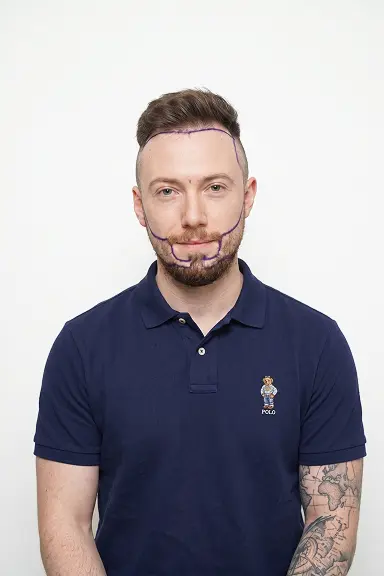
Success
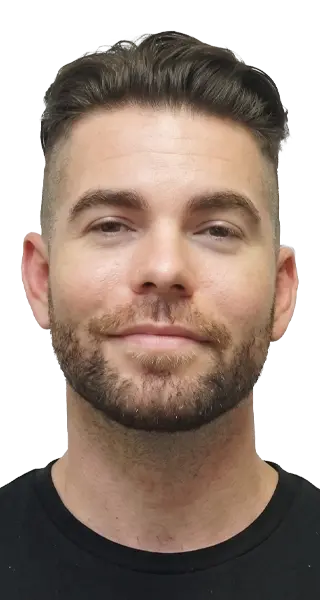
BEFORE
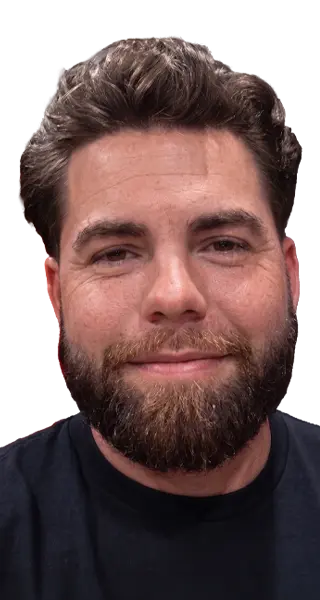
AFTER

Max Witcher
- 3,600 Grafts
- 6 months post-op
- From Texas, US
Before the procedure, I felt like I had a decent beard, maybe a bit sparse. But looking at my pictures from before just tells me my beard used to look so bad! Now it's ten times better. Thanks Estenove!
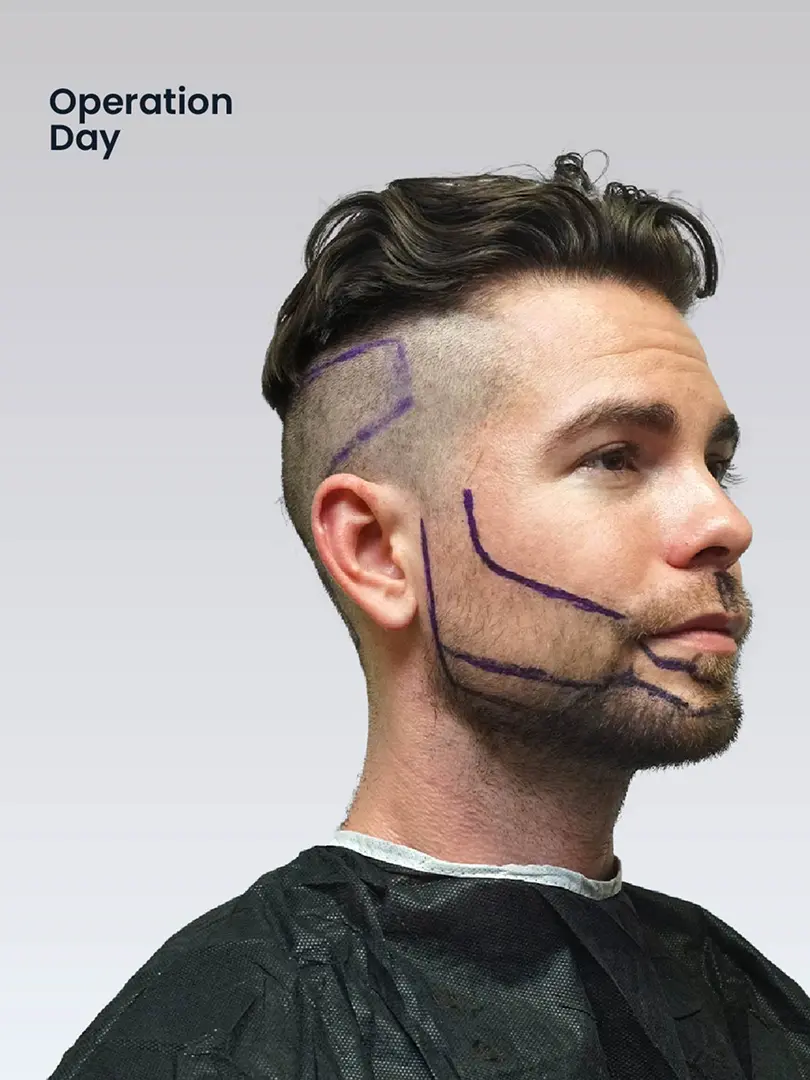
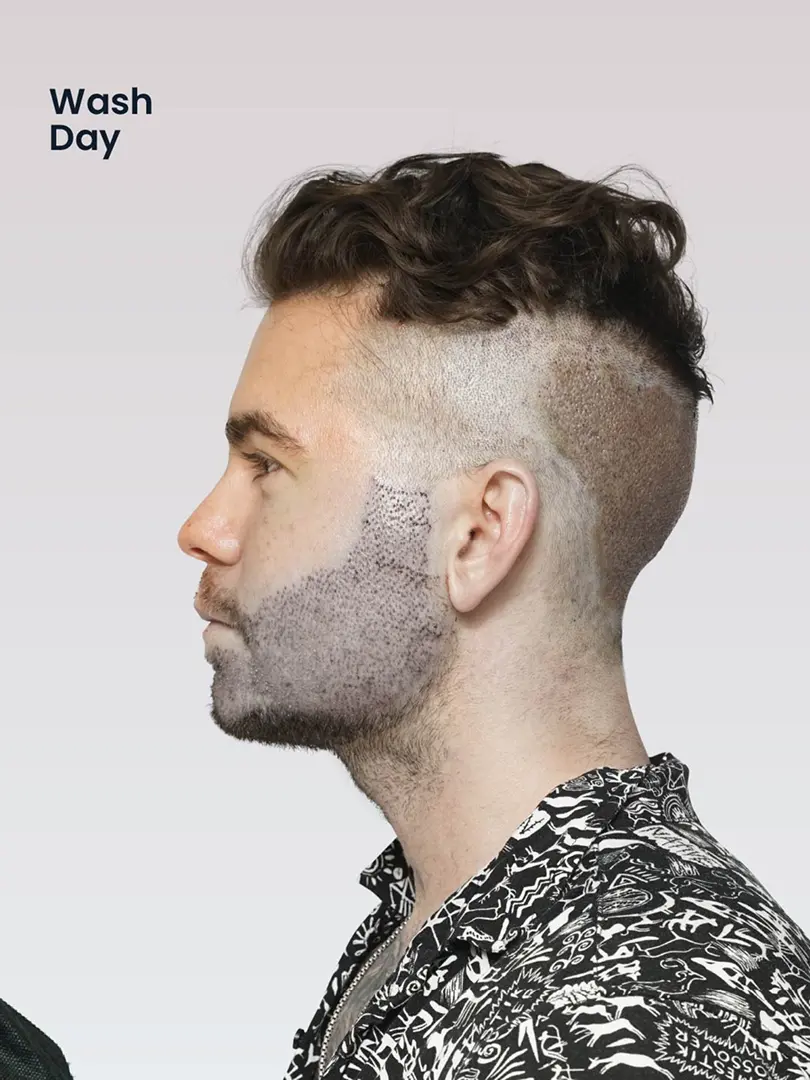
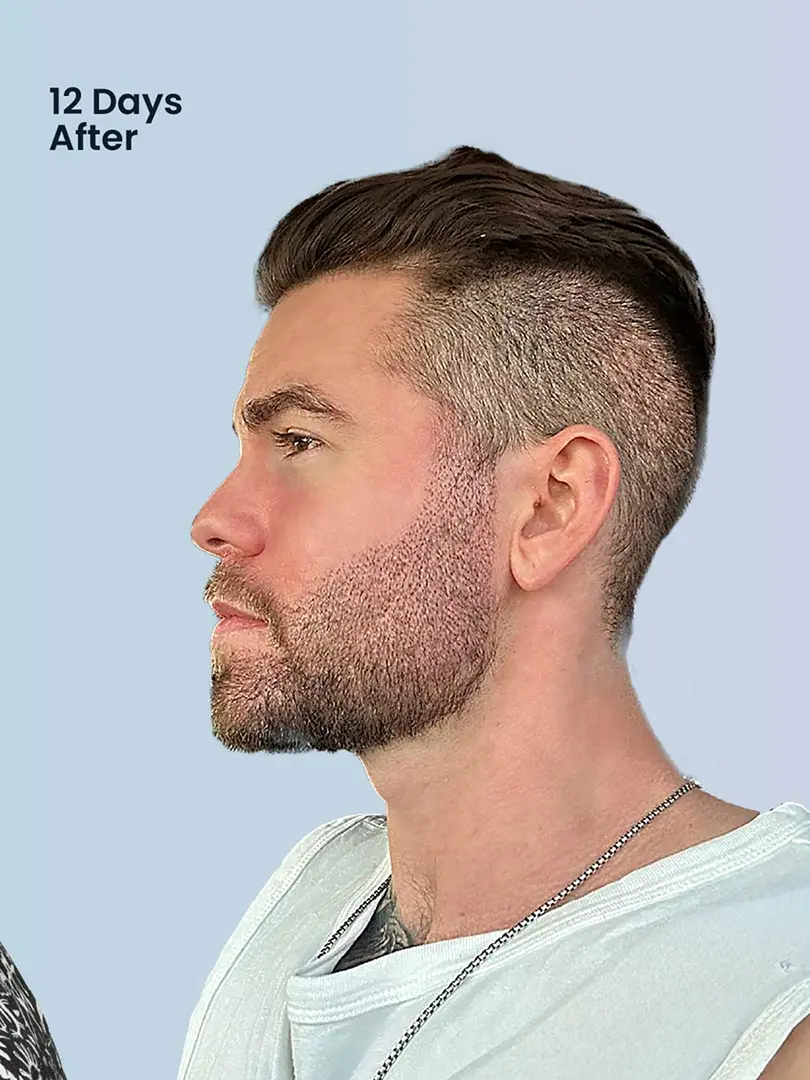
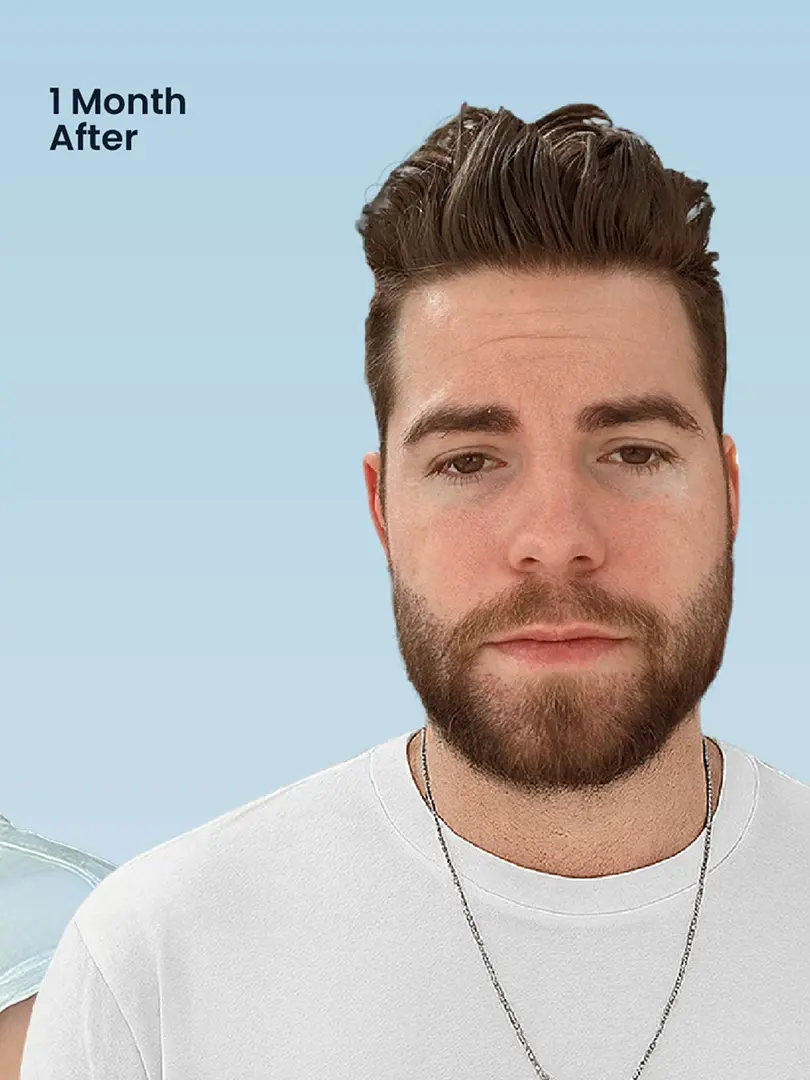
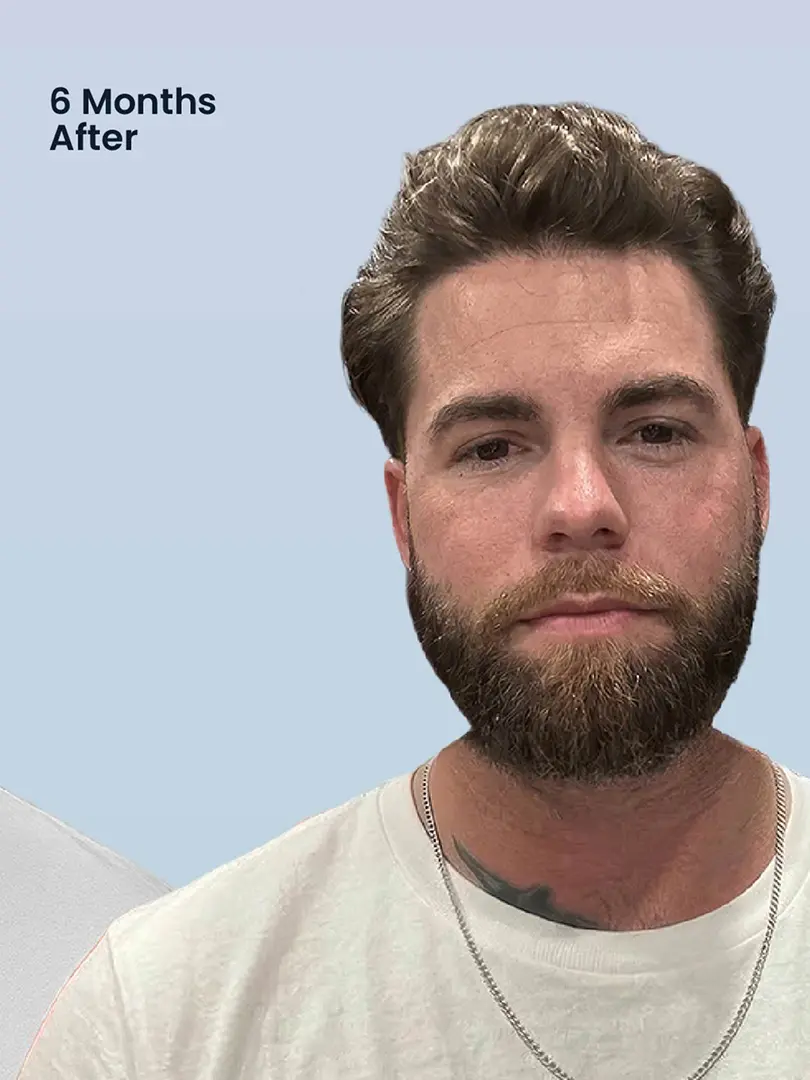
How full the result can be depends on donor capacity, hair calibre and how much of the beard area needs coverage. A single case shows one outcome, not a guaranteed result. You can view further documented cases in our before and after gallery.
What Is a Beard Transplant?
A beard transplant is a minimally invasive cosmetic procedure where healthy hair follicles are extracted from a donor area (usually the back of the scalp) and transplanted into the beard region. The transplanted hairs grow naturally and can be shaved, styled, and maintained like your original facial hair.
The procedure is also known as beard implants or facial hair transplantation. Both terms describe the same operation: moving your own DHT-resistant follicles from the scalp donor area into the face.
Donor supply is finite. How much can be achieved depends on the density available at the back and sides of the scalp. A consultation confirms what the donor area can sustainably provide before the design is agreed.
At Estenove, we offer both:
• FUE (Follicular Unit Extraction): Precise graft harvesting for even distribution
• DHI (Direct Hair Implantation): Implants follicles directly without channel incisions
Both methods are performed under local anaesthesia. Recovery is generally quick and, because follicles are taken individually rather than as a strip, the donor area is left without a linear scar.
Which Facial Areas Can Be Treated ?
Beard restoration is not limited to the cheeks and jaw. The same technique is used across the facial hair region:
• Full beard — building overall coverage and density where growth is sparse
• Patchy areas — filling defined gaps while blending into existing growth
• Moustache — the upper lip, where angle and direction matter more than volume
• Goatee and chin — reshaping or strengthening the chin line
• Sideburns — restoring or reconnecting the line to the hairline
• Scar coverage — camouflaging scarring from injury, surgery or burns
Eyebrow restoration follows similar principles but is planned separately. See our eyebrow transplant page.
Beard Transplant Procedure
For a Fuller Beard
1. Consultation and Preparation

A specialist evaluates your hair density, facial structure, and growth goals. We create a custom beard design based on your preferences and ideal symmetry.
Design is where a beard transplant is won or lost. The outline is agreed before treatment because density needs to be distributed deliberately: heavier along the jaw and chin, and lighter at the cheek line where a hard edge can look artificial.
2. Local Anesthesia

Anaesthesia is applied to both the donor and beard areas using the Comfort-In system, which delivers it without a conventional needle. Most patients report only mild pressure during the procedure itself.
3. Graft Extraction & Implantation

Hair follicles are extracted using a micro-punch tool, channels are created (if FUE), and grafts are implanted at precise angles to match your natural beard direction.
Facial hair grows at a flatter angle than scalp hair, so each graft is placed to follow the direction of the surrounding growth. Between extraction and implantation, grafts are outside the body and vulnerable. Handling time and storage conditions affect how many survive to grow.
4. Recovery & Aftercare

You'll receive instructions for washing, sleeping position and general care. Small crusts form around the implanted grafts and clear during the first days of healing. Some redness or mild swelling in the donor and beard areas is normal early on. Most patients are back to everyday routines quickly.
Visible results take longer than physical recovery. See the results overview above for what to expect. Aftercare matters most in the first weeks while the grafts are still settling.
A natural hair transplant, done properly in Turkey

Estenove team has helped me a lot and all professionally assisted me from day 1 of inquiry til day 12 of post op and still ongoing assistance with my recovery.

Estenove team has professionally assisted me from day 1 of inquiry until day 12 of post op. They all are very helpful and still are assisting me with in my full journey recovery.
Can’t wait for the full final result and definitely recommend the clinic to anyone going to do the surgery.
Can’t wait for the full final result and definitely recommend the clinic to anyone going to do the surgery.
J’ai beaucoup apprécié l’accompagnement proposé par Estenove. Pour moi, ce n’était pas une intervention banale. Le fait de partir me faire opérer dans un autre pays, avec des normes sanitaires et d’hygiène potentiellement différentes de celles de la France, dans une clinique que je ne connaissais pas, m’a forcément donné un peu le trac.
Finalement, j’ai été très agréablement surpris. La clinique était extrêmement propre, moderne et, je dirais même, classe. Elle m’a fait une meilleure impression que beaucoup d’hôpitaux que j’ai pu voir en France.
Le suivi des patients est également incomparable avec ce que j’ai connu en France. À la moindre question, j’ai toujours obtenu une réponse très rapidement, généralement en moins d’une heure, et c’est vraiment rassurant, notamment après l’intervention.
Je suis donc très content de pouvoir ajouter à mon tour un avis positif sur cette clinique, car c’est justement grâce aux nombreux témoignages que j’avais lus, notamment sur Trustpilot, que j’avais décidé de choisir Estenove. Aujourd’hui, je comprends pourquoi elle bénéficie d’une aussi bonne réputation.
Aujourd'hui le résultat est là et ça fait 7mois que j'ai eu l'intervention.
Finalement, j’ai été très agréablement surpris. La clinique était extrêmement propre, moderne et, je dirais même, classe. Elle m’a fait une meilleure impression que beaucoup d’hôpitaux que j’ai pu voir en France.
Le suivi des patients est également incomparable avec ce que j’ai connu en France. À la moindre question, j’ai toujours obtenu une réponse très rapidement, généralement en moins d’une heure, et c’est vraiment rassurant, notamment après l’intervention.
Je suis donc très content de pouvoir ajouter à mon tour un avis positif sur cette clinique, car c’est justement grâce aux nombreux témoignages que j’avais lus, notamment sur Trustpilot, que j’avais décidé de choisir Estenove. Aujourd’hui, je comprends pourquoi elle bénéficie d’une aussi bonne réputation.
Aujourd'hui le résultat est là et ça fait 7mois que j'ai eu l'intervention.
6 months post surgery. Going on my 35% hair growth result. So far very satisfy ! Can’t wait for more !
I’m at the 6.5 month post-op stage for my frontal transplant of 3,500 hairs from my donor area. The results are simply amazing, and so natural! Everyone is already blown away with the results. Great staff, great doctor, great follow up. It was SO worth it. I can highly recommend Team EsteNove! 🙏🏻 Thank you!
I had a great experience with EsteNove. The whole team was very professional, helpful and friendly, with excellent communication throughout the entire process. Everything was made very easy and simple to follow, from start to finish.
I was so happy with my first experience that I decided to come back for a second hair transplant with them. That alone shows how much I trust the team and their service. I would definitely recommend EsteNove to anyone considering a hair transplant.
I was so happy with my first experience that I decided to come back for a second hair transplant with them. That alone shows how much I trust the team and their service. I would definitely recommend EsteNove to anyone considering a hair transplant.
In the middle of March, I came to Istanbul for a hair transplant. I was very familiar with the city. But it was still nice getting picked up at the airport. Got transferred to my hotel and the next morning had the operation. From my time at the health center getting the operation until now 6 months later they check up on me and continue to see my progress. I recommend them if you're interested in getting a hair transplant in Istanbul.
Couldn’t be happier,extremely satisfied more than I expected, thanks to Dr.ahmed can AZAK,and his team, not only the surgeries,they also stay in touch with you for 15 months now. Will be back soon for beard transplant.
From my initial contact to six months after my procedure, they have always had great communication, they are always there to answer questions, and most of all I am extremely happy with my results.
The entire process, from being picked up at the airport and taken to the hotel to the procedure itself was top-notch. I have never been given this type of care through the American medical system.
I highly recommend.
The entire process, from being picked up at the airport and taken to the hotel to the procedure itself was top-notch. I have never been given this type of care through the American medical system.
I highly recommend.
From my initial contact to six months after my procedure, they have always had great communication, they are always there to answer questions, and most of all I am extremely happy with my results.
The entire process, from being picked up at the airport and taken to the hotel to the procedure itself was top-notch. I have never been given this type of care through the American medical system.
I highly recommend.
The entire process, from being picked up at the airport and taken to the hotel to the procedure itself was top-notch. I have never been given this type of care through the American medical system.
I highly recommend.
I cannot speak highly enough of Estenove and the incredible support the team provided throughout my entire journey. From my very first consultation through to the operation itself, their team was professional, knowledgeable, and genuinely caring.
What stood out most was their consultative approach. They never rushed me into any decisions and took the time to thoroughly explain every step of the process. At each important stage, they made sure I fully understood what to expect, answered all of my questions, prioritised my health and ensured I felt comfortable and confident moving forward.
The procedure itself was handled with exceptional care and professionalism. Everything was explained clearly, and I always felt I was in safe hands. Most importantly, I could not be happier with the outcome.
As anyone considering a procedure like this knows, it can be a very personal and delicate matter. What I appreciated most was not only the expertise of the team, but also their continued support after the operation. Their response times were incredibly fast, and they remained available whenever I needed guidance or reassurance during recovery.
The combination of outstanding results, genuine care, clear communication, and exceptional post-operative support made this a truly positive experience from start to finish. I would highly recommend Estenove to anyone considering this journey
What stood out most was their consultative approach. They never rushed me into any decisions and took the time to thoroughly explain every step of the process. At each important stage, they made sure I fully understood what to expect, answered all of my questions, prioritised my health and ensured I felt comfortable and confident moving forward.
The procedure itself was handled with exceptional care and professionalism. Everything was explained clearly, and I always felt I was in safe hands. Most importantly, I could not be happier with the outcome.
As anyone considering a procedure like this knows, it can be a very personal and delicate matter. What I appreciated most was not only the expertise of the team, but also their continued support after the operation. Their response times were incredibly fast, and they remained available whenever I needed guidance or reassurance during recovery.
The combination of outstanding results, genuine care, clear communication, and exceptional post-operative support made this a truly positive experience from start to finish. I would highly recommend Estenove to anyone considering this journey
ALL INCLUSIVE
What’s
in the package
- Beard TransplantFULL TREATMENT PACKAGE€3,395
- DHI or FUE Method
- Nove MIC® Method
- Maximum Grafts
- Multilingual Medical Advisors
- Post-Operative Check-up and Washing
- Pre-Operative Health Checks
- VIP Transport
- 2-3 Nights of Accommodation
- Free Dental X-Ray Consultation
- 1-Month Aftercare Products
- 18 Months of Aftercare Assistance
Planning Your Beard Transplant
Why Consider a Beard Transplant?
Not every man can naturally grow a full beard — and that’s often due to genetics, hormones, or past trauma (like scarring or burns). Beard transplants have become a popular cosmetic solution for those who:
- Struggle with patchy or uneven beard growth
- Want to conceal scars or skin conditions
- Desire a fuller, styled beard to match facial features
- Have lost facial hair due to injury or surgery
Beyond appearance, patients often describe the result in terms of how they feel about their face rather than the beard itself.
Beard Design Planning: What Suits Your Face?
Beard design is part of the surgery, not an afterthought. The outline determines where density is placed and how the result frames your face, so it is agreed with you at consultation before any grafts are extracted:
- Square Face: Goatee, Royale, or connected mustache styles emphasize jawline
- Round Face: Short boxed or Balbo beards give structure and balance
- Oval Face: Most beard styles work well, including 3-day stubble or full beard
- Rectangular Face: Hipster or chin strap styles add width and proportion
Design also has to respect your donor supply. A dense full beard needs considerably more grafts than filling two patchy areas, so the design and graft plan are settled together.
ESTENOVE
- All inclusive package
- Up to 75% saving
GREAT CHOICE
~
€
4k
UNITED KINGDOM
Tag
~
€
12k
EUROPE
Tag
~
€
11k
UNITED STATES
Tag
~
€
16k
VALUE COMPARISON
Transparent pricing.
No surprises.
It is not just about “saving costs,” but about “safeguarding the overall wellbeing” of you.
Your treatment plan and price are confirmed after consultation — and won't change on the day. No hidden fees. The price you're quoted is the price you pay.
See all prices & benefits
Get your free hair analysis
24/7 ONLINE and FREE
Estenove Knowledge Base
Frequently Asked Questions
Frequently
Asked
Questions
Is beard transplant procedure painful?
Discomfort is reduced to a minimum thanks to local anesthesia and modern techniques. At Estenove, we use the Comfort-In system to minimize pain during both the extraction and implantation phases. Most patients report only mild pressure or sensation during the procedure.
Am I a good candidate for beard transplant?
Suitability comes down to four things rather than one factor.
• Medical suitability — your general health, skin or scalp conditions affecting the treatment areas, and anything that may affect healing.
• Donor capacity — whether the back and sides of the scalp can supply enough grafts for the design without thinning the donor area.
• Beard-growth characteristics — how existing facial hair grows, its calibre and direction, and how well transplanted hair will blend with it.
• The underlying cause — patchy or absent growth from genetics, hormones or scarring behaves differently from a temporary or treatable cause.
A consultation assesses all four and confirms whether a beard transplant is the right step.
Is there an age limit for beard transplants?
There is no fixed age limit. What matters is whether your facial hair pattern has settled and whether the cause of patchy growth has been established. Suitability is assessed on medical fitness, donor capacity and how your beard grows rather than on age.
How long does a beard transplant procedure take?
The procedure typically takes 4 to 8 hours, depending on the number of grafts needed and the technique used (FUE or DHI). It’s a one-day outpatient procedure, and you can usually return to your hotel the same evening.
How long does the beard transplant last?
Transplanted follicles are taken from an area of the scalp that is not affected by pattern hair loss. Once they establish, they generally continue to grow long-term and can be shaved and trimmed like the rest of your beard.
A transplant does not change how your existing facial hair behaves, so results are best judged on the transplanted area itself.
When can I shave again?
Estenove will give you a specific date, and it depends on how the grafts are settling. Shaving too early risks disturbing them, so follow the Estenove’s timing rather than estimating.
What is the most popular beard transplant method?
Both FUE and DHI are used for beard work, and the choice depends on the case rather than on one method being better. FUE gives more flexibility when harvesting across a wider donor area. DHI implants each graft directly, which suits detailed work along a beard line. Your surgeon recommends one after assessing the donor area and agreed design.
Will a beard transplant leave scars?
Follicles are extracted individually rather than as a strip. The donor area at the back of the scalp is therefore left with small round healing points rather than a linear scar. Once hair grows back to a short length, these are generally not noticeable.
In the beard area, the implantation points are very small and settle as healing completes. Visible donor marking is usually linked to over-harvesting, so if you wear your hair very short, raise it at consultation.
How many grafts does a beard transplant need?
It depends on how much of the beard area is being treated and how dense a result you want. Filling two patchy areas and building a full beard are very different plans.
The graft number is set at consultation after donor capacity is assessed, and it influences both the design and the price. Our graft calculator gives a rough indication beforehand.
Explore alternative techniques that are ideally matched to your needs.
FUE
Sapphire
FemaleAfroAsian
DHI
Choi Pen
FemaleAfroAsian
STEM
CELL
Therapy
FemaleAfroAsian
EYEBROW
Transplant
FemaleAfroAsian
Already trusted by 20,000+ worldwide patients with an average rating of 4.9★
#EstenoveExperience